Weiming Penguin · Master Data Operations Methodology: Is Your Master Data “Running Unprotected”? Three Metrics for Assessing Pharmaceutical Data Health
Article images may contain Chinese text.
As digitalization sweeps through the pharmaceutical industry, master data management is no longer a question of “whether you have it,” but “how well it works.”
Many pharmaceutical companies invest heavily in master data systems, yet three questions expose their weaknesses: Is your master data alive or dead? Have new retail outlets actually translated into sales? Do you know why retail outlets have been lost?
Drawing on practical experience serving more than a hundred pharmaceutical companies, Weiming Penguin starts here with a discussion of how to tell whether your master data is truly healthy.

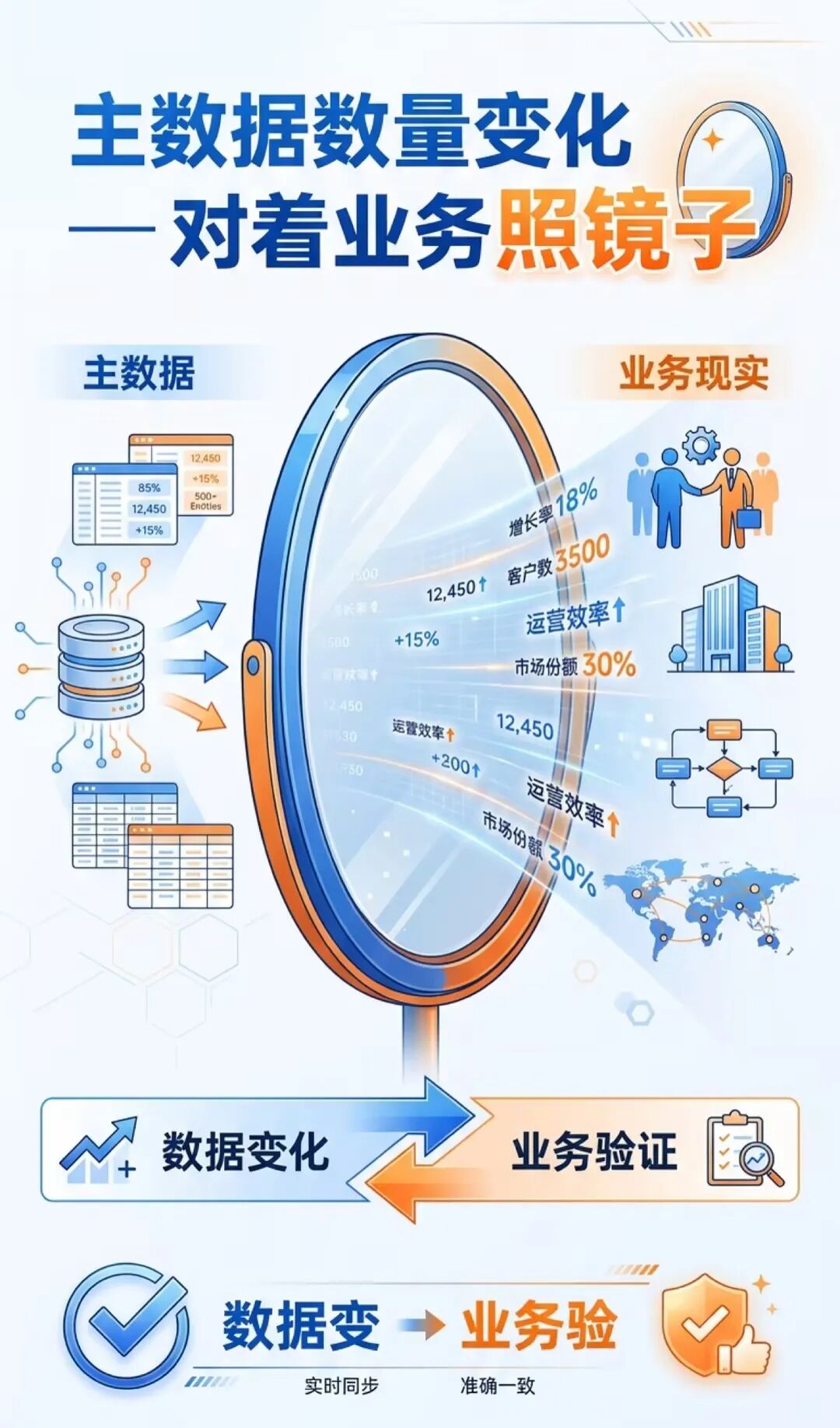
Changes in Master Data Counts: Holding a Mirror Up to the Business
Increases and decreases in master data are never just about the numbers. Behind every master data record is a real customer, and each customer's contribution directly affects the achievement of annual sales targets.
The key is to interpret data changes alongside business conditions.
| Data Pattern | Business Interpretation | Response Strategy |
| Steady growth in master data | Business expansion is progressing well; new retail outlet development is effective | Maintain follow-up to ensure new retail outlets convert to sales |
| Stagnating or declining master data | Possible retail outlet attrition or business contraction | Issue timely alerts and analyze reasons for attrition |
| Abnormal fluctuations in master data | Possible issues with data quality or business strategy | Conduct in-depth root-cause analysis and optimize management processes |
In short: More data is not necessarily better. Data is better when it more accurately reflects business reality.
Master Data Quality ≠ Filling Every Field
Many companies equate master data quality with “field completion rates.” This is a common misconception.
The real measure of master data quality is whether these fields help business teams accurately understand retail outlets and make sound judgments. For example:
- An outlet name recorded as “A Certain Pharmacy” delivers vastly different business value from “A Certain Pharmacy (XX Road Branch / Chain / Medical Insurance Designated / Grade A).”
- Whether a retail outlet is linked to the correct distributor and its upstream channel directly determines the accuracy of distribution data.
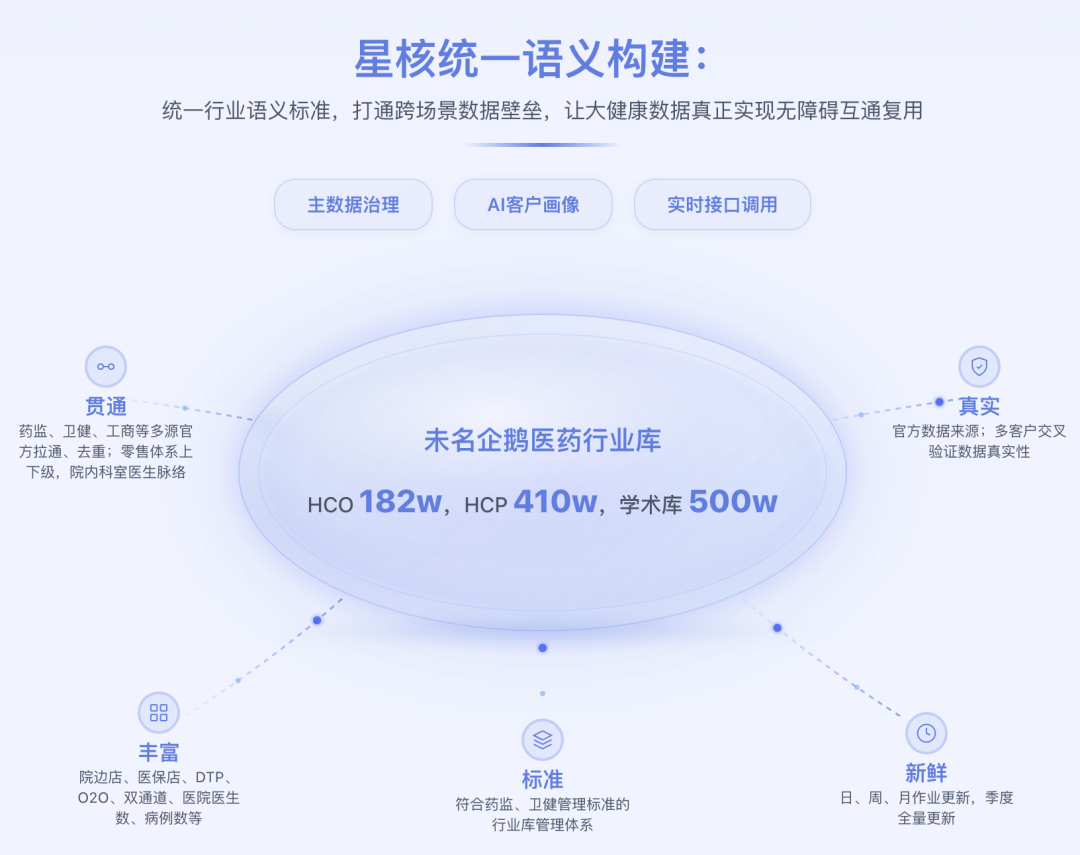
Drawing on an industry database of 1.8 million+ retail outlets and AI-powered intelligent cleansing technology, Weiming Penguin helps companies build high-quality master data systems by focusing on three core tasks:
- Standardized Retail Outlet Profiles: Standardize basic attributes such as names, addresses, regions, grades, and types, giving every master data record a clear identity.
- Intelligent Relationship Mapping: Automatically learn distributor–outlet and upstream–downstream relationships, combined with manual validation, to ensure error-free distribution data.
- Automated Master Data Cleansing: AI automatically identifies similar retail outlets, standardizes names and addresses, removes duplicates, and merges records, handling a million records in half an hour.
Three Yardsticks for Measuring the Health of Master Data Operations
If your master data operations track only one metric, you are definitely getting it wrong.
We recommend focusing on three dimensions—master data activity, the master data addition rate, and the master data conversion rate. Together, they form the “golden triangle” for measuring the health of master data operations.
Why these three? Because they are directly linked to sales attainment. Breaking it down:
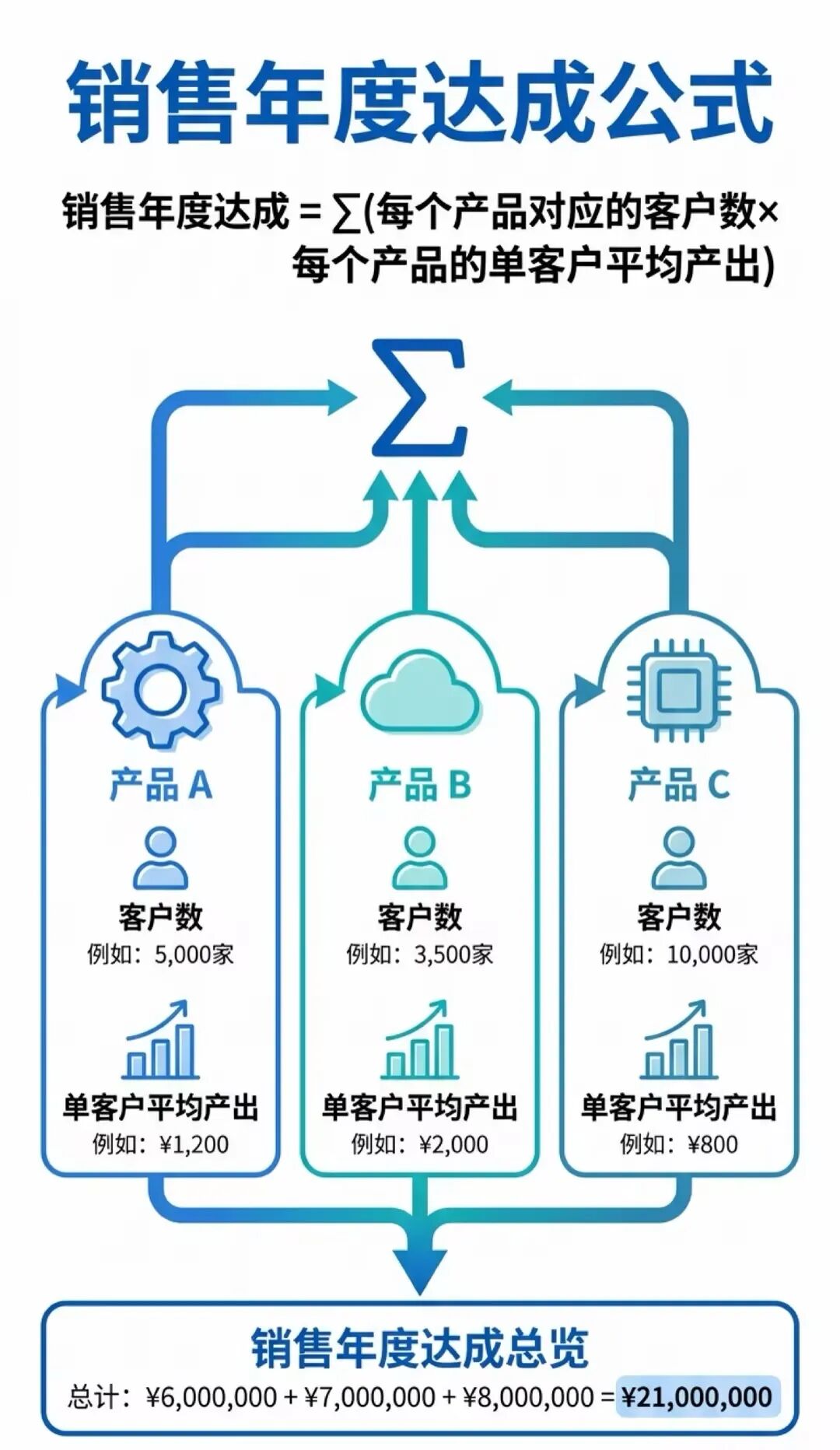
Annual Sales Attainment = Σ (Number of Customers for Each Product × Average Sales per Customer for Each Product)
Based on this formula, Weiming Penguin's Retail Outlet Connect® helps companies precisely identify three core types of retail outlet issues:
| Issue Type | Symptoms | Approach to Resolution |
| No Growth in Retail Outlets | No effective way to open doors | Establish initial contact through sales personnel, channel personnel, CSOs, and others |
| No Repeat Purchases from Retail Outlets | No value created for retail outlet users | Improve products and services to strengthen retail outlet loyalty |
| Retail Outlet Attrition | Declining product appeal or competition from rival products | Analyze competitor activity and adjust marketing strategies |
No growth in retail outlets → an insufficient customer base; no repeat purchases from retail outlets → insufficient sales per customer; retail outlet attrition → inability to retain even the existing base. Three problems call for three entirely different response strategies.
The first step in master data operations is not rushing to deploy a system or expand the dataset. It is first establishing your own “health baseline”:
- Are changes in record counts keeping pace with business development?
- Can data quality support an understanding of the business?
- Are the three metrics—activity, additions, and conversion—being monitored consistently?
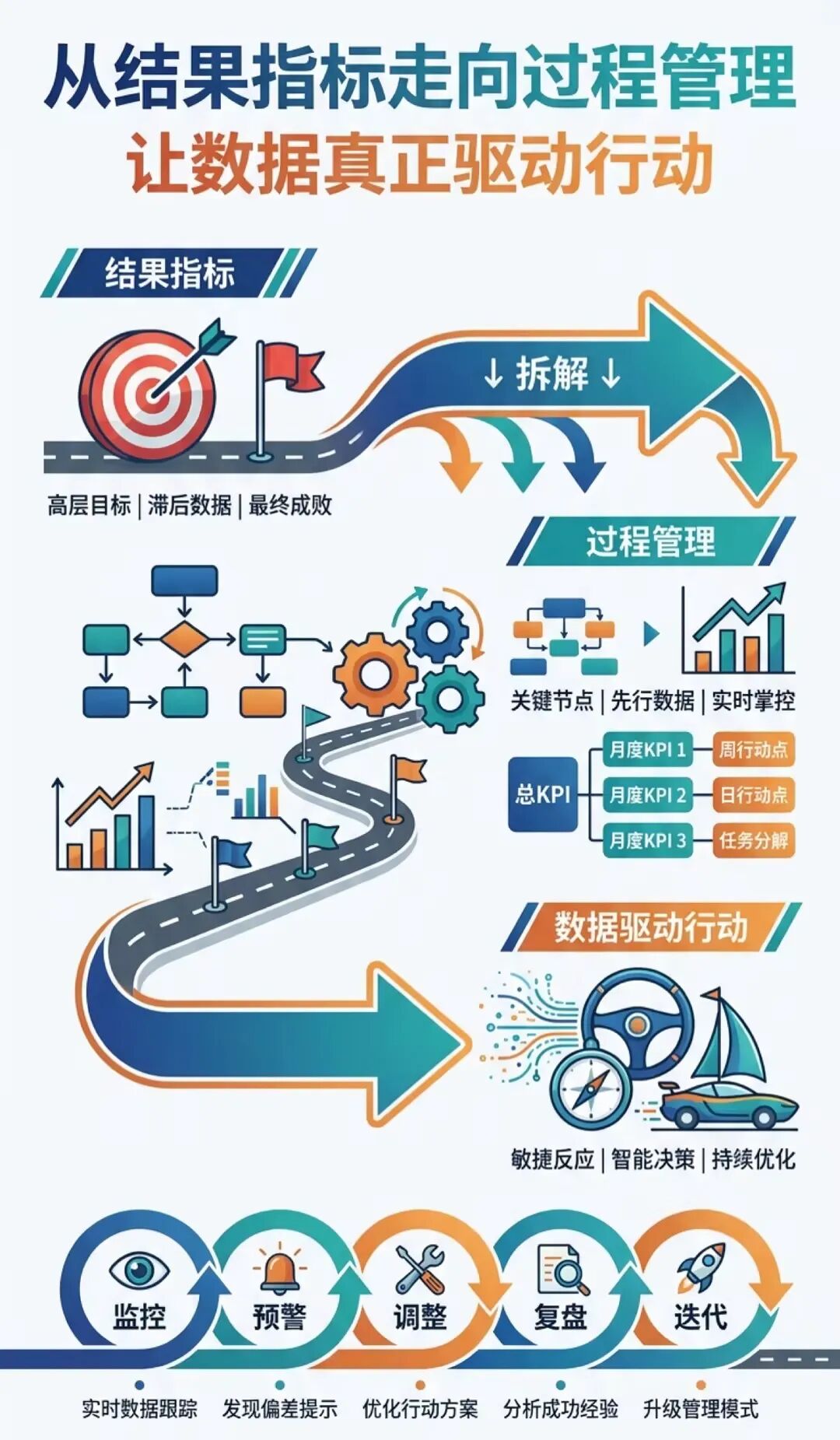
In the next article, we will discuss how, once the problems are clear, to move from “outcome metrics” to “process management” and make data truly drive action.