Weiming Penguin · Master Data Operations Methodology: Outcomes Can Only Be “Observed”; Processes Can Be “Managed”—A Guide to Process Management for Pharmaceutical Master Data
Article images may contain Chinese text.

In the previous article, we discussed how to use three “golden metrics” to establish a clear baseline for master data health.
But knowing where the problems lie is only the first step. What truly sets companies apart is whether they can move from “outcome metrics” to “process management,” turning data into actionable instructions.

Many pharmaceutical companies' management dashboards look like this: monthly sales of XXX ten-thousand units, coverage of XXX retail outlets, XX new retail outlets…
These are certainly important. But the problem is that they tell you only “what happened,” not “what to do.”
Here is an analogy:
Outcome metrics are like a health check report telling you that your blood sugar is high. Process metrics are like a doctor's prescription telling you to manage your diet, exercise more, and take medication daily. The core capability of Weiming Penguin's Insight Analytics Platform is connecting the complete chain of attribution from “outcomes” to “processes”:
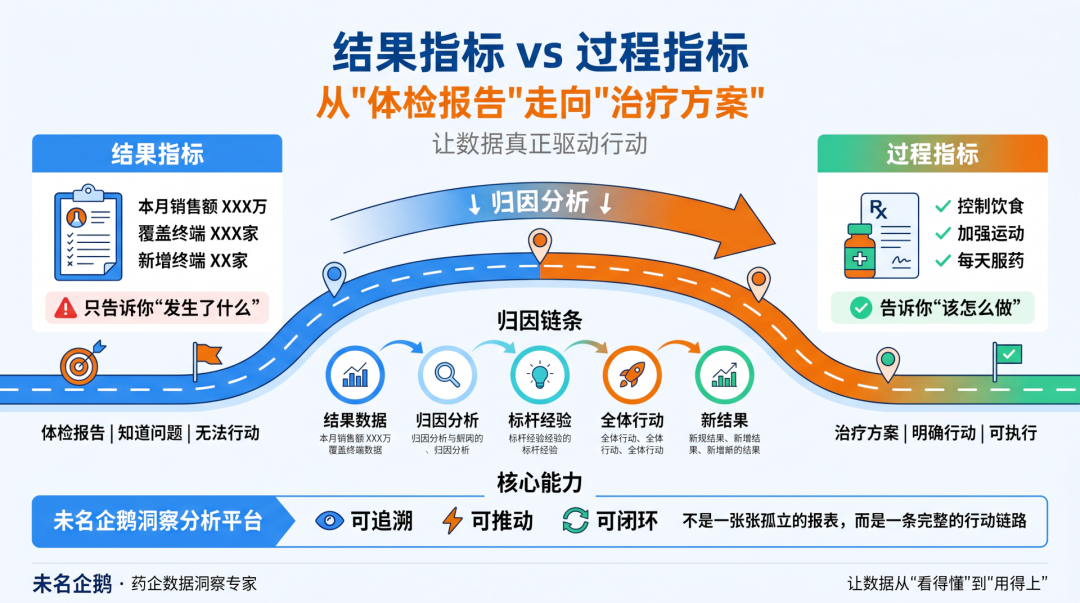
Outcome Data → Attribution Analysis → Benchmark Practices / Lessons from Failure → Teamwide Action → New Outcomes. This means you see not isolated reports, but an action pathway that is traceable, actionable, and capable of closing the loop.
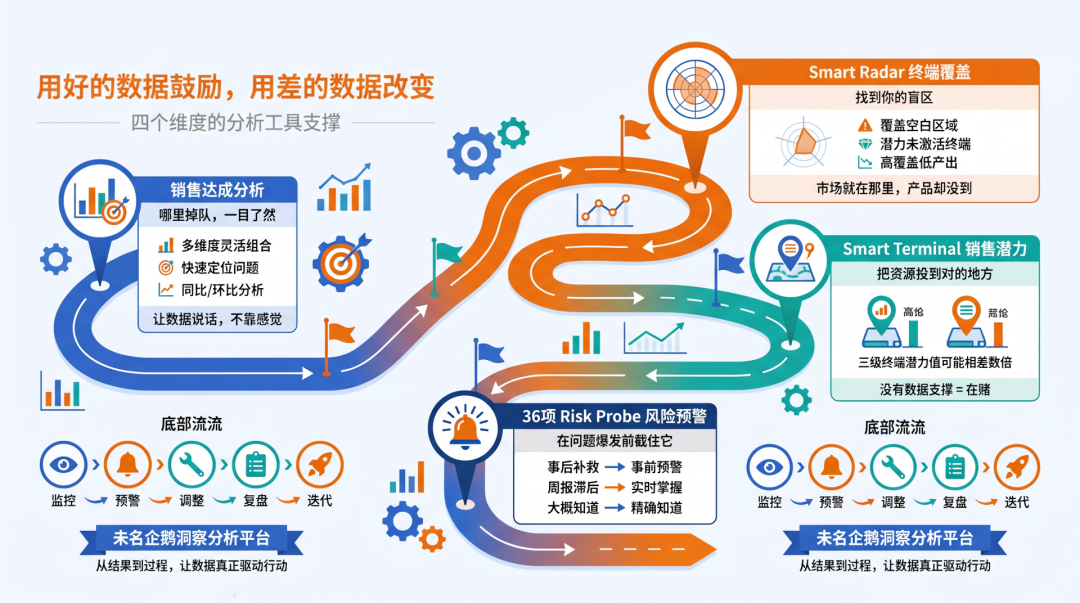
1. Sales Attainment Analysis: See at a Glance Where Performance Is Lagging
By flexibly combining multiple dimensions—product line, region, channel, and team—managers can quickly pinpoint:
Which product specification is holding back performance in which region? Which sales team's growth curve is abnormal? Where are the real year-over-year and period-over-period gaps?
Stop assessing performance by “gut feeling” and let the data speak.
2. Retail Outlet Coverage Model (Smart Radar): Find Your “Blind Spots”
This “radar chart” can precisely identify:
- Which regions/channels have coverage gaps
—The market is there, but your products are not - Which retail outlets have potential but have not been activated
—Competitors are serving them, but you are not - Which retail outlets have dense coverage but low sales output
—It is time to scale back
3. Sales Potential Model (Smart Terminal): Put Resources Where They Belong
Use big data to assess each retail outlet's true potential, rather than allocating resources through experience-based guesswork.
Even among tier-three retail outlets, the potential of community hospitals and township health centers may differ severalfold. Resource allocation without data support is essentially a gamble.
4. Risk Early-Warning Analysis (36 Risk Probes): Catch Problems Before They Erupt
Weiming Penguin's original set of 36 risk probes covers scenarios such as inventory anomalies, sharp drops in distribution flows, policy shocks, and unusual competitor activity, enabling:
A shift from “after-the-fact remediation” to “advance warning” A shift from “delayed weekly reports” to “real-time visibility” A shift from “a vague sense that something is wrong” to “knowing exactly where the problem lies”
Beyond analytical capabilities, you also need a place where data can be seen.
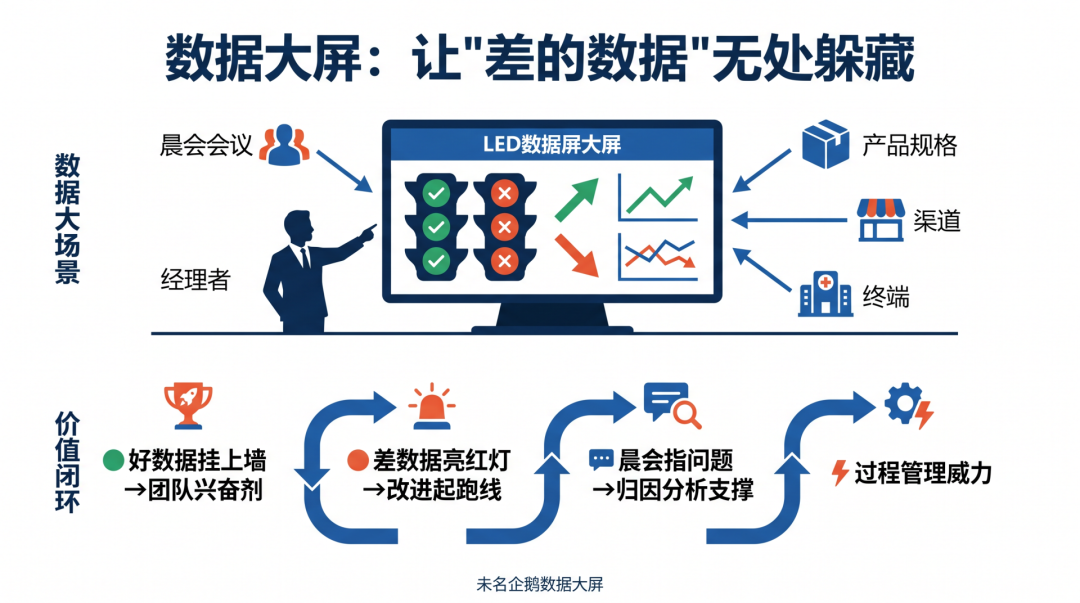
Weiming Penguin's data wallboards show real-time performance on core KPIs for product specifications across channel tiers and retail outlets. Their value lies not in looking impressive, but in the following:
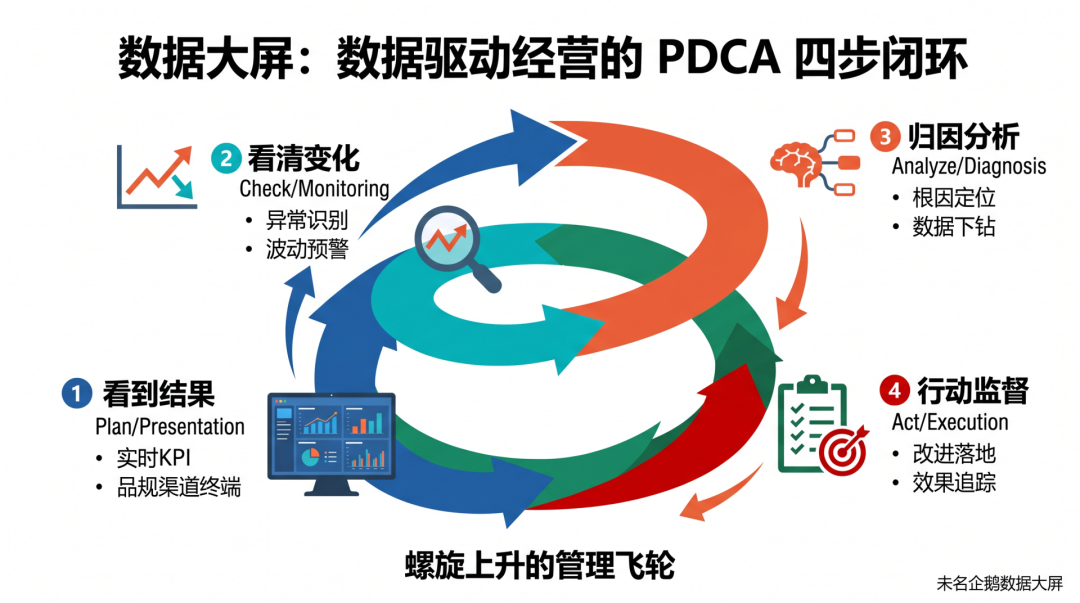
Positive data displayed on the wall energizes the team. Negative data flashing red becomes the starting point for improvement. When a manager points at the wallboard during a morning meeting and asks, “What is going on in this region?”, attribution analysis already supports the answer—that is the power of process management.
The Middle Stage of Master Data Operations: Moving from “Viewing Data” to “Using Data”
Outcome metrics tell you “whether there is a problem” Process metrics tell you “where the problem lies” Attribution analysis tells you “how to solve it” Data wallboards ensure “everyone is looking at the same thing”