Weiming Penguin Monday Data Coffee | AI Scanned 16,221 Pharmacies Designated for Chronic and Special Diseases and Found Three Opportunities Pharmaceutical Companies Have Yet to Notice
Article images may contain Chinese text.

27 provinces, 16,221 pharmacies designated for outpatient chronic and special diseases.
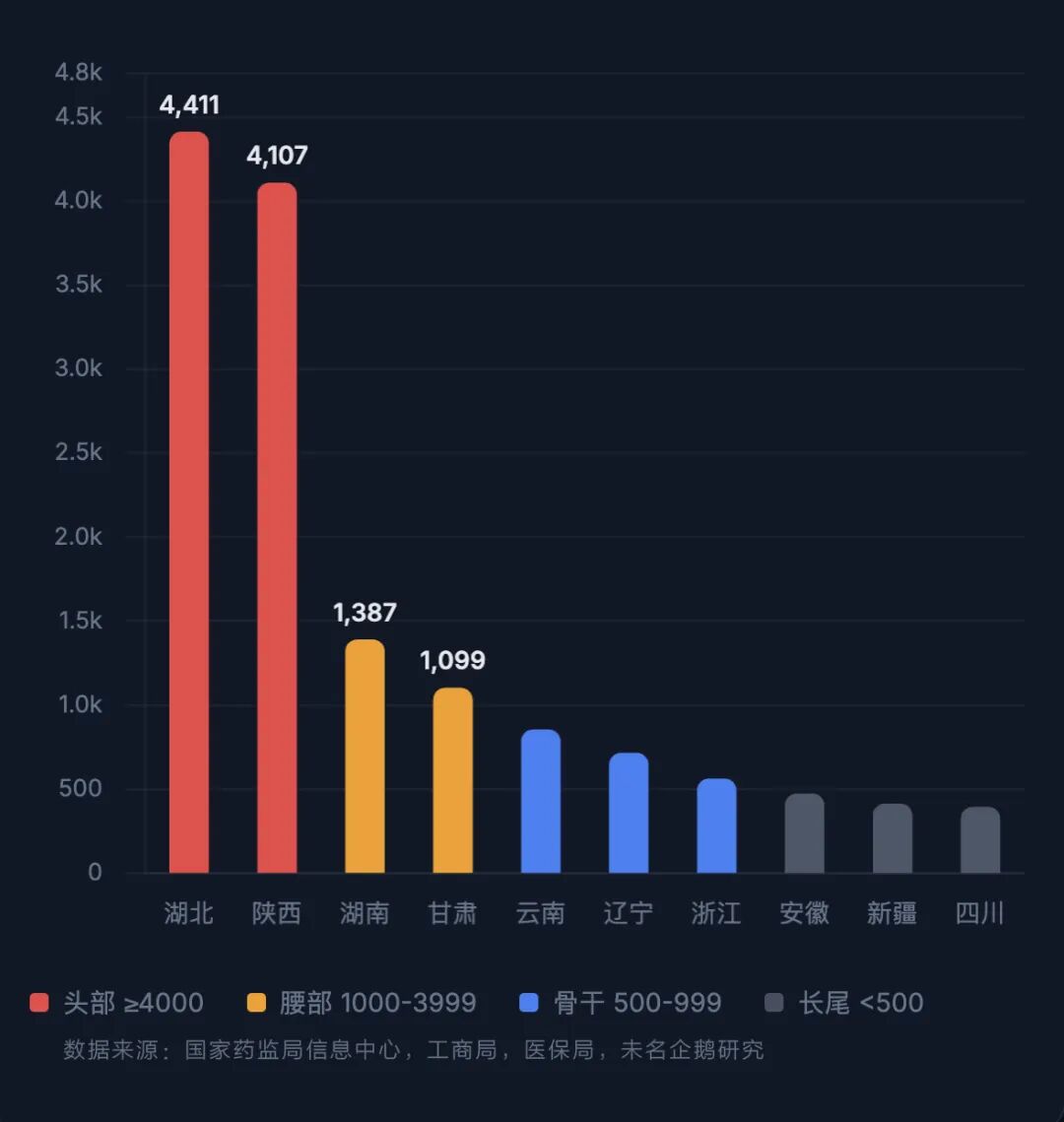
A complete AI scan found not an even distribution but extreme concentration.
Q: Why does Hubei rank first? What is the main reason?
A: Here is what Penguin Claw says: broader policy eligibility × Jointown's dense channel network × a post-pandemic surge in approvals. These three factors work together; population is not the driver.
1️⃣ More permissive medical insurance policies: Wuhan covers 60+ outpatient chronic and special diseases (most provinces cover only 20–30). Entry requirements for pharmacies are low, allowing small and midsize chains to qualify.
2️⃣ The Jointown effect: This leading national pharmaceutical distributor is headquartered in Wuhan, with a dense retail outlet network that has helped many pharmacies complete their designation applications.
3️⃣ Post-pandemic policy benefits: Targeted national support after 2020 prompted medical insurance authorities to accelerate approvals in batches, resulting in a concentrated surge in designations in 2021–2022.
4️⃣ Spillover demand from healthcare: Leading hospitals such as Tongji and Union attract patients from across the province and neighboring provinces. Many nearby pharmacies have applied for designation to meet their medication purchasing needs.
Province | Number of Designated Pharmacies | Population | Designated Pharmacies per Capita | Characteristics |
Hubei | 4,411 | 580 million | 76 per million | Broader policy eligibility + Jointown + post-pandemic acceleration |
Shaanxi | 4,107 | 390 million | 105 per million | Higher per capita density; the Xi'an model |
Hunan | 1,387 | 660 million | 21 per million | Relatively conservative policies |
Gansu | 1,099 | 250 million | 44 per million | Small absolute number |
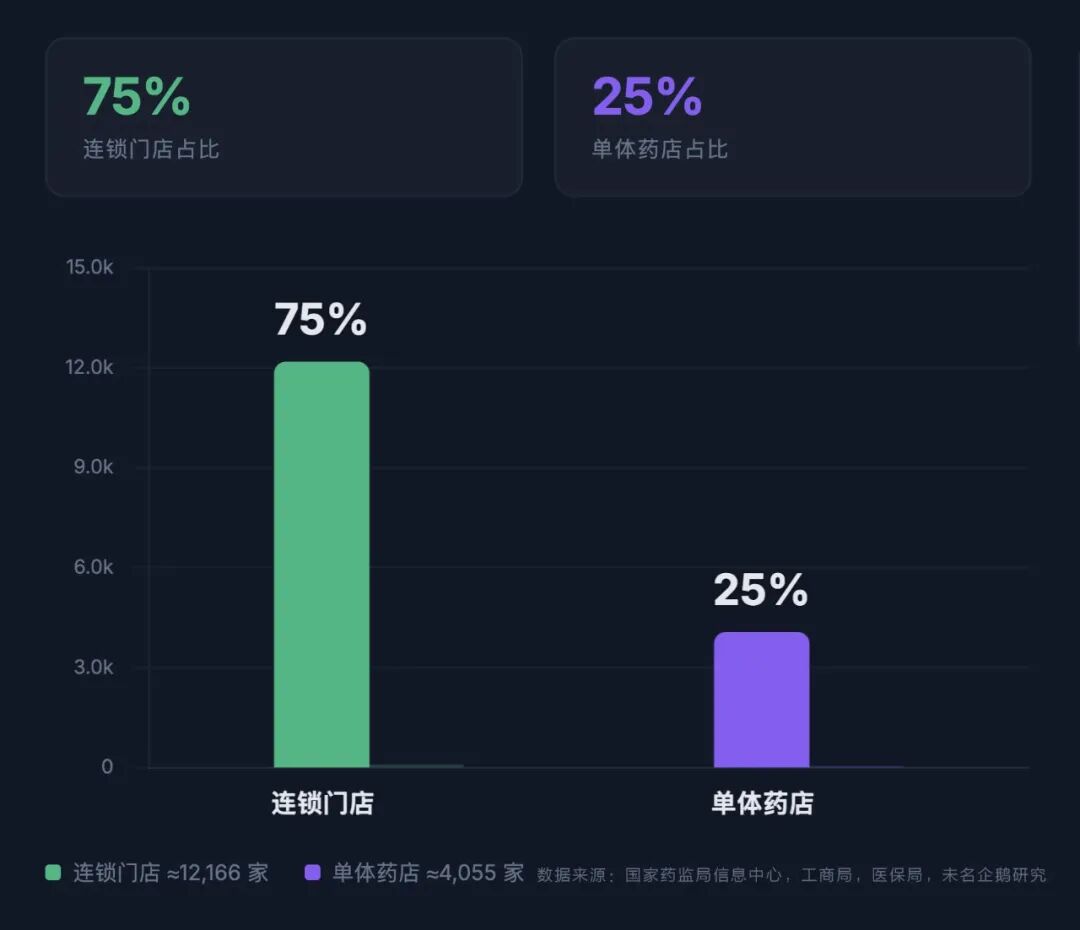
75% Are Chain Stores: A Single Negotiation Can Reach Thousands of Retail Outlets
(China's National Healthcare Security Administration has not yet listed outpatient chronic and special diseases separately. All Penguin data on relevant pharmacies comes from publicly available sources, including provincial and municipal medical insurance authorities and government websites.)
62 chronic and special diseases receive nationally standardized reimbursement, and designated pharmacies can settle payments directly through medical insurance.
Pharmacies are evolving from “places to buy medicine” into the first point of access for chronic and special disease management. Medication purchasing demand from 400 million people with chronic diseases is increasingly concentrating in pharmacies.
AI is making this point of access smarter: automatically matching disease categories with reimbursement rates, delivering targeted medication reminders, and monitoring prescription flows in real time. The shift is from “people finding medicines” to “medicines finding people.”
Two Scenarios Where AI Is Already at Work
1. AI Site Selection: Generate a Channel Priority Map in 2 Minutes
| Priority | Province | Rationale |
| Act Now | Hubei, Shaanxi, Hunan | High density and rapid policy implementation |
| Position Early | Jiangxi, Sichuan | Eligibility determination platforms are live; rapid growth is imminent |
| Monitor and Test | Guangdong, Chongqing | Slow implementation, but high potential |
A traditional team needs two months to perform this analysis. AI needs only two minutes.
2. AI Monitoring: Track Competitor Activity in Real Time
Changes in prescription volumes, competitors' distribution channels, policy gaps—what once relied on regional managers' experience now becomes data-driven, real-time decision-making.
Wuhan: Hubei ranks first nationally with 4,411 pharmacies and has published a list of drugs eligible for “separate payment” for chronic and special diseases, making it the ideal testing ground for validating AI channel models.
Jiangxi: It has only 66 pharmacies, but a 24-hour eligibility determination platform is already live. AI predicts 5–8-fold growth within 12–18 months, making market entry least costly now.
Direct Cross-Provincial Settlement: Five chronic and special diseases already qualify for cross-provincial settlement nationwide. Data can flow across regions, allowing patient behavior data from Wuhan and Xi'an to be cross-analyzed.
① AI is not a nice-to-have; it is standard equipment—let AI run data analysis in real time, at 10 times the efficiency of manual work.
② Secure a data advantage first—validate AI models in Hubei, Shaanxi, and Hunan, then replicate them in other provinces.
③ The competition in 2026 is “AI-powered pharmaceutical companies vs. traditional pharmaceutical companies”—the first to mine the data gold mine of 16,221 pharmacies wins.

Phone:13717915751 Email:contact@tenez.cn
About the Series
Monday Data Coffee is produced by Weiming Penguin. Every Monday at 8 a.m., when you open WeChat, a cup of “Data Coffee” is already waiting for you. With 52 editions/year, these concise, frequent updates let you take the pulse of the industry on your commute.
Core value: One cup a week to refresh your mind, using high-value data to spark deeper thinking about the industry.
Data sources: Information Center of China's National Medical Products Administration, administrations for industry and commerce, medical insurance authorities, and the Weiming Penguin Retail Outlet Dictionary. Corrections to any omissions or errors are welcome!
Disclaimer: This article is intended solely to share pharmaceutical information and does not constitute investment advice or recommendations for decision-making.