Article images may contain Chinese text.
Inaccurate data, low efficiency, weak controls, and security concerns—four major pain points in channel distribution data management at a domestically funded pharmaceutical company were becoming obstacles to business growth and better decision-making.
As nationwide marketing networks in the pharmaceutical industry continue to mature and improve, channel distribution data has become essential to pharmaceutical companies’ decisions on optimizing supply chains, adjusting sales strategies, and preventing and controlling market risks. However, one domestically funded pharmaceutical company faced multiple pain points in channel distribution data management, severely limiting business efficiency and its ability to unlock data value:
First, its foundation for data accuracy was weak. Frequent anomalies during DDI data collection, combined with flaws in the existing system architecture, caused duplicate records to account for more than 15% of the data, directly leading to inaccurate sales forecasts;
Second, data processing was inefficient. The entire process relied on manual operations, taking 15 business days from data collection and cleansing to finalization of the distribution data. Delays in finalized data prevented regional managers from promptly adjusting the pace of product placement.
Third, there were gaps in data controls. Permissions were defined only at the ‘region’ level, not by job role. Frontline sales representatives could view core data from other regions, and there was no audit-trail mechanism for data changes;
Fourth, security controls were insufficient. Data was mostly shared by email as Excel files, creating risks of file loss and tampering.

To address these pain points, Weiming Penguin built an on-premises channel distribution data management system for the customer, centered on ‘end-to-end data governance + full-process risk control.’ It established a closed-loop framework covering ‘integration of multiple sources—master data unification—distribution data processing—analytics and alerts—security and compliance.’
1. Integrating Data from Multiple Sources
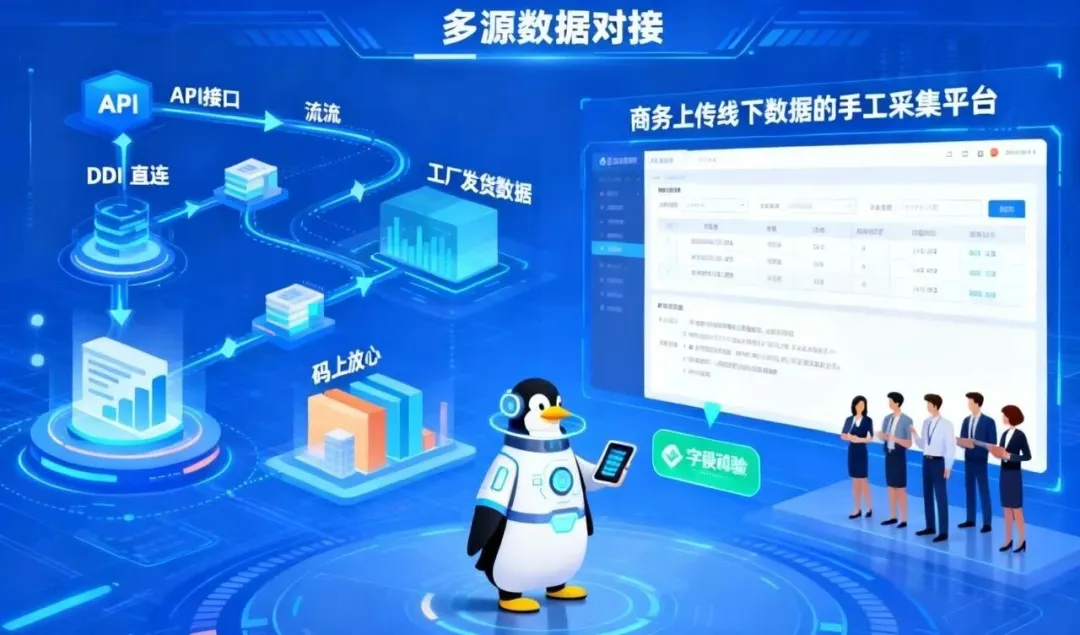
The system breaks down data silos in two ways. It uses APIs to connect directly to DDI distribution data, factory shipment data, and data from the ‘Mashang Fangxin’ platform. It also provides a manual data collection platform through which the commercial team can upload offline distributors’ manually compiled distribution data, with built-in field validation at entry. This fills gaps in direct-connection coverage and raises data collection completeness to more than 98%.
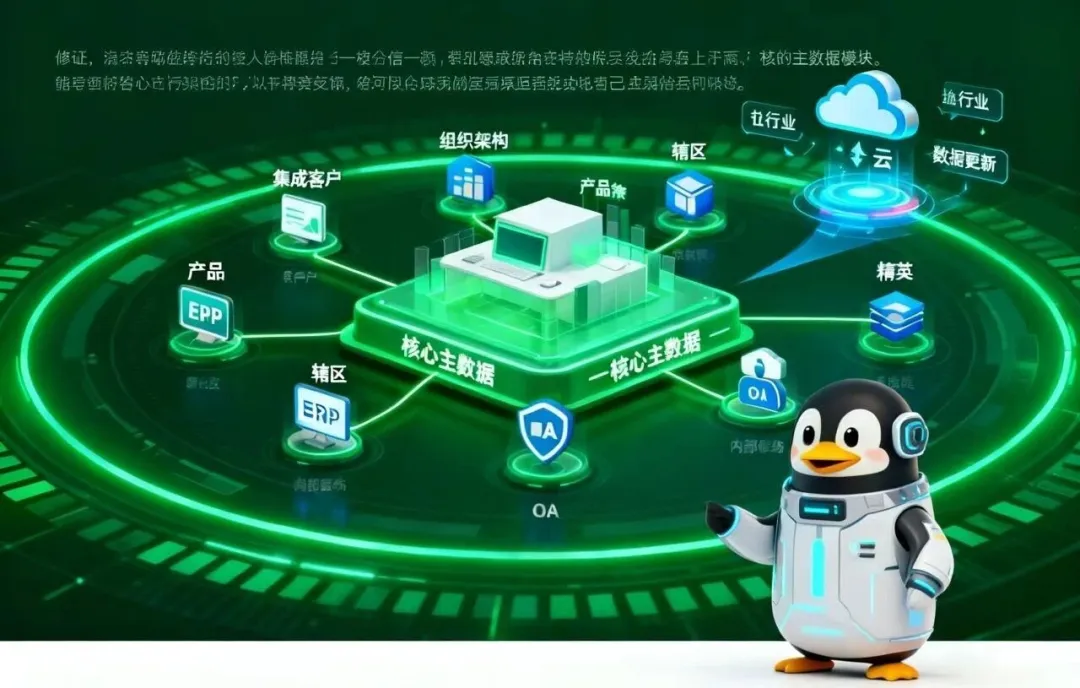
2. Unified Master Data ManagementGroup-wide master data management policies and processes were established to enable management and distribution through a unified platform, improving master data quality and management efficiency. The system integrates core master data on customers, products, organizational structures, territories, and more. Connections to internal systems such as ERP and OA enable centralized management and maintenance, while the latest data from Penguin Industry Cloud is pushed on a scheduled basis to keep master data current.
3. Distribution Data ProcessingThe system provides a complete workflow of ‘intelligent cleansing—online appeals—multidimensional analytics.’ Based on Penguin’s proprietary patented AI cleansing technology, it automatically cleanses distribution data, achieving a 95% automated cleansing rate and greatly improving productivity. For data anomalies, sales representatives can submit appeals online and upload supporting documents. Headquarters reviews them and provides feedback within 24 hours, and adjusted distribution data is synchronized in real time with departments including sales and finance.
4. Analytics and Alerts Module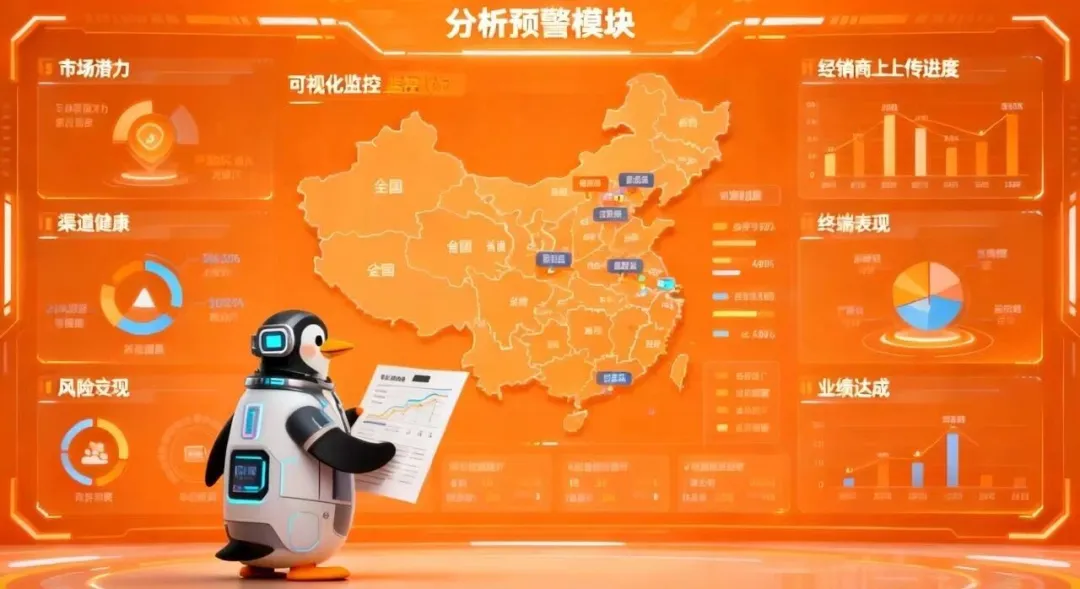
The analytics and alerts module covers management scenarios including market potential, channel health, outlet performance, risk alerts, and performance target attainment. While uncovering market potential, it improves transparency in channel management, maintains market order, and controls business risks. A visual monitoring dashboard displays sales target attainment rates across China’s provinces and distributors’ upload progress in real time, allowing headquarters managers to stay informed of data developments at any time.
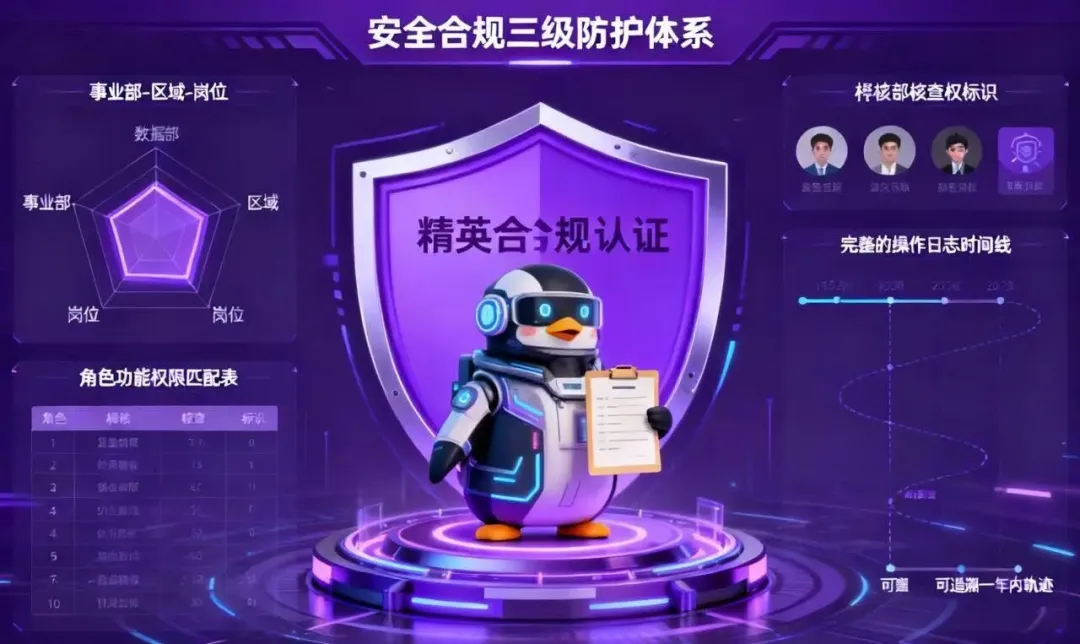
5. Security and ComplianceThe system establishes a three-tier protection framework: data permissions are assigned by ‘business division—region—job role’; functional permissions are precisely matched to roles—for example, the audit department may verify data but cannot modify it; and operation logs fully record data viewing, modification, and deletion, allowing operations within the past year to be traced. This fully meets internal compliance and data security requirements.
Through the customized channel distribution data management system, Weiming Penguin not only addressed the customer’s four core pain points—data accuracy, efficiency, controls, and security—but also empowered the customer through a data-driven approach. Meanwhile, the unified data foundation eliminated information gaps between departments. Sales and finance now use the same distribution data for performance calculations and cost analysis, improving collaboration efficiency by 40% and laying a solid data foundation for the company’s long-term development.
Weiming Penguin uses AI technology to overcome pharmaceutical companies’ data challenges and customized systems to build a firm foundation for decision-making. If you also face channel management challenges, we welcome you to work with us to create a new model of digitally driven growth for pharmaceutical enterprises!