Monday Data Coffee | 500 Meters Can Define a Pharmacy—and Your Sales Strategy
Article images may contain Chinese text.

We ran an analysis:
We ranked all pharmacies in a certain province by their distance from the nearest residential community, then cross-referenced them with a brand's retail outlet coverage list for that province.
We found that 63% of its TOP 200 most frequently visited retail outlets were not community-adjacent pharmacies.
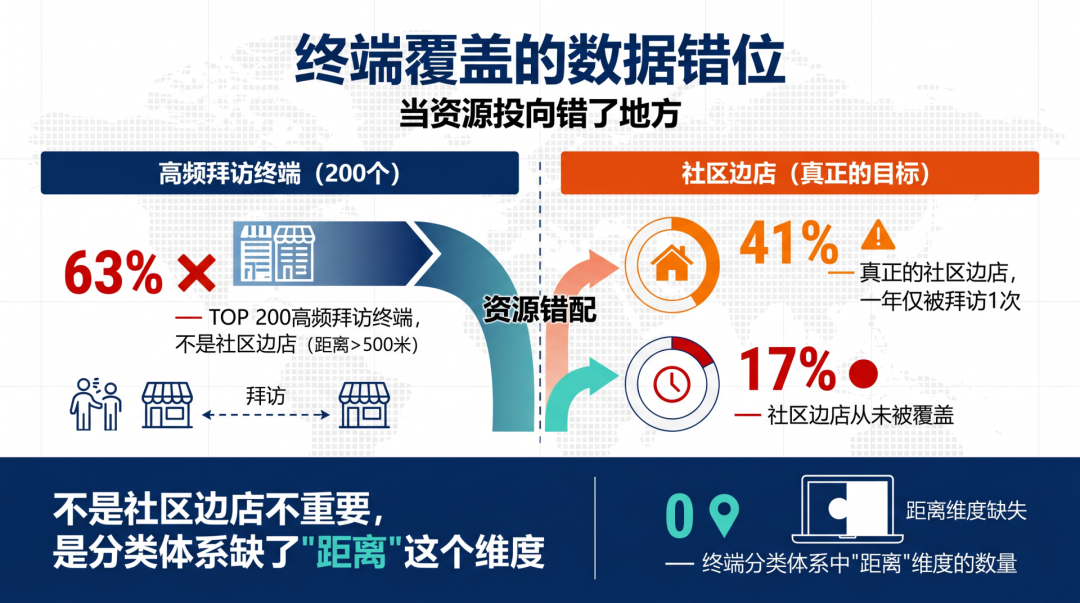
In other words, most of the retail outlets it spent the most effort maintaining were more than 500 meters from a residential area.
Yet in the same province, 41% of genuine community-adjacent pharmacies had been visited only once in a year, and 17% had never been covered.
It was not that these community-adjacent pharmacies were unimportant.
Their retail outlet classification system simply had no "distance" dimension.
Because most pharmaceutical companies tier their retail outlets like this:
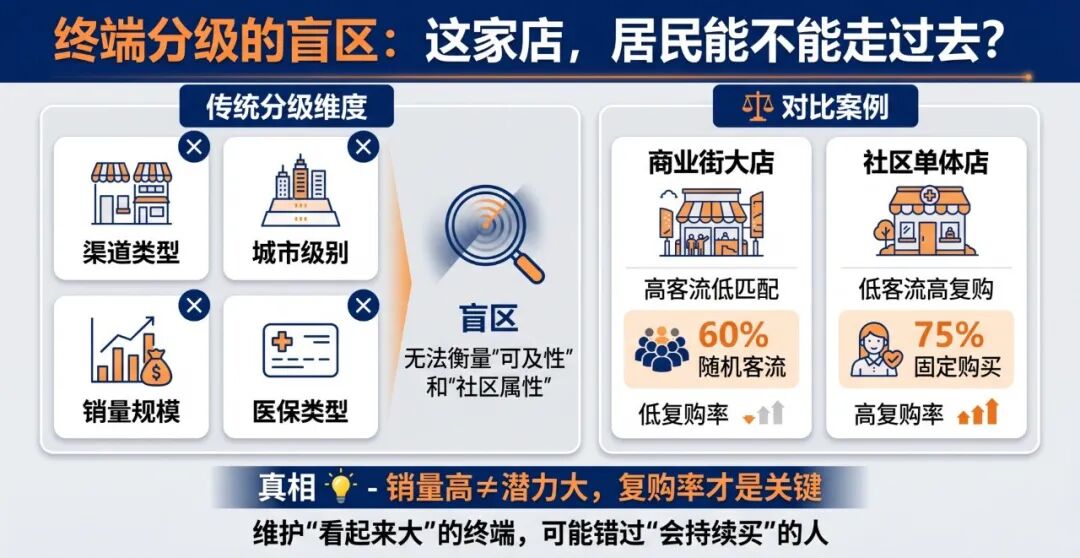
There is nothing wrong with any of these dimensions.
But they share one blind spot: none can answer, "Can local residents walk to this store?"
A large chain pharmacy on a shopping street may sell three times as much as an independent community pharmacy, but take a closer look at the numbers
Large shopping-street pharmacy: "Random passersby" account for 60% of monthly customer traffic, with a poor match to your product category Independent community pharmacy: "Regular purchases by nearby residents" account for 75% of monthly customer traffic, with a repeat purchase rate more than twice that of a shopping-street pharmacy
You are maintaining a retail outlet that "looks big," while potentially missing a group of people who "will keep buying."
There was another counterintuitive finding:
Many brands had manually labeled a group of "community pharmacies" in their internal data.
But when we checked those labels against the 500-meter distance criterion
Of the manually labeled "community pharmacies," 28% were more than 800 meters from the nearest residential community. Meanwhile, 19% of genuine community-adjacent pharmacies—those within 500 meters—were labeled "ordinary retail outlets" or had no label at all.
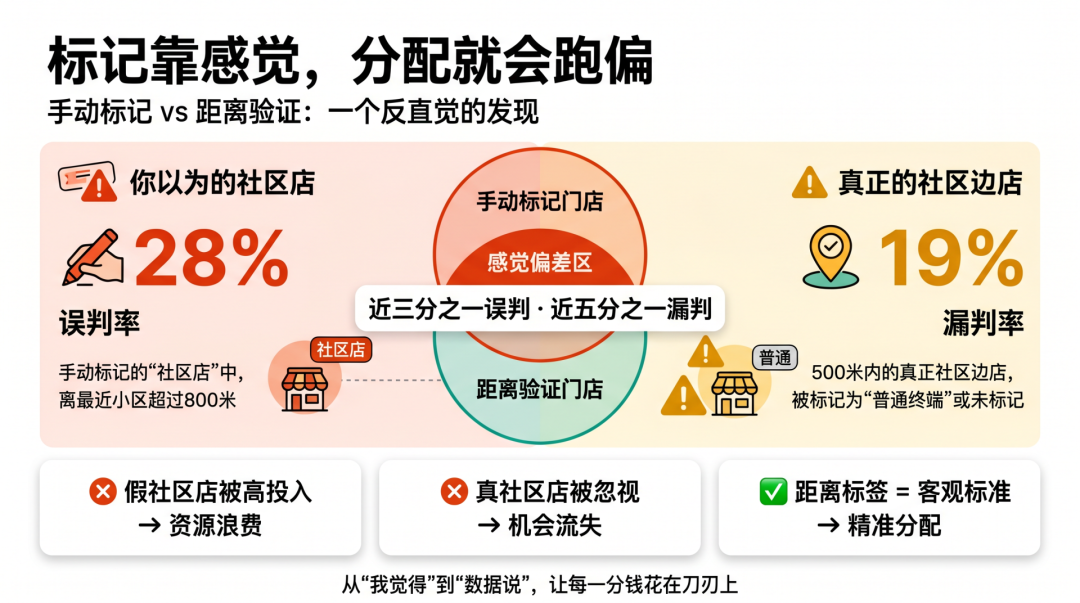
In other words:
Nearly one-third of the stores you think are in a community are not You are overlooking nearly one-fifth of the stores that really are in a community
When labels are based on gut feeling, resource allocation goes off track.
We built a simple four-quadrant model that divides retail outlets into four categories:
Most brands allocate resources along the simple line of "higher sales → more investment."
But the outlets that truly make the difference are those 🔵 high-potential community-adjacent pharmacies.
Their sales are not yet high, but residents are right next door. A single successful first-choice product recommendation could turn them into 🟢 gold mines.
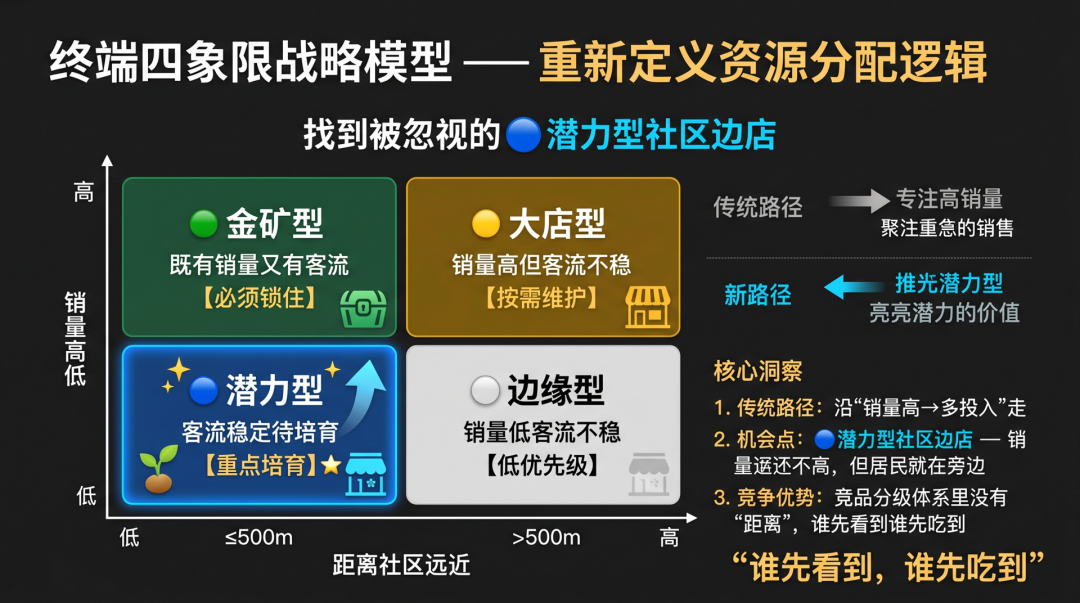
And competitors have not set their sights on them yet, because their tiering systems do not include "distance" either.
Those who spot the opportunity first reap the rewards first.
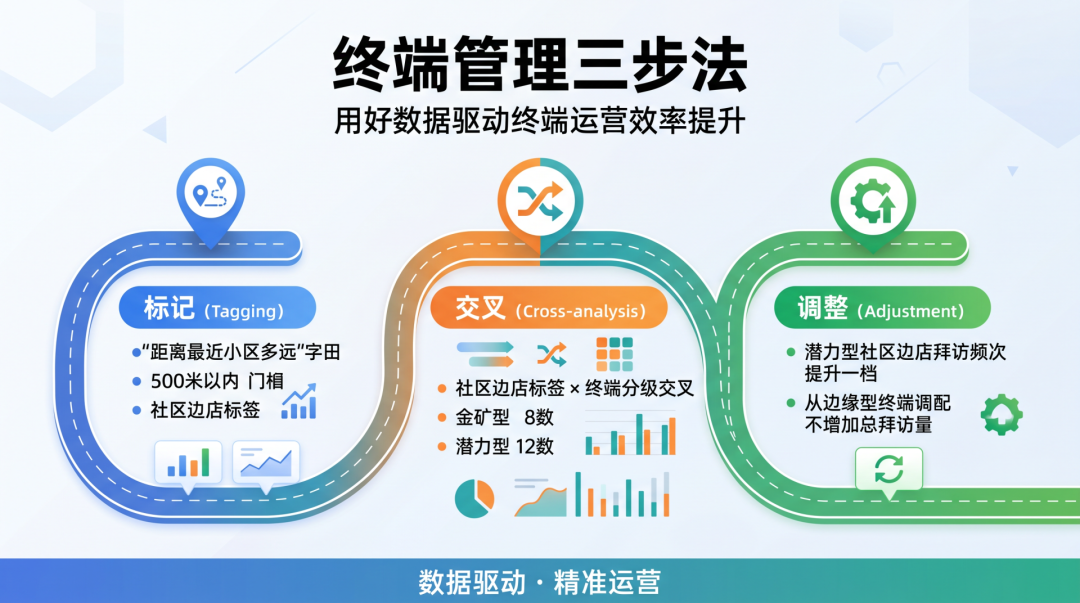
Step 1: Label. Add a "distance from the nearest residential community" field to every retail outlet. Label those within 500 meters as community-adjacent pharmacies.
Step 2: Cross-reference. Cross-reference the community-adjacent pharmacy label with your existing retail outlet tiers to see how many gold mines and high-potential outlets you have.
Step 3: Adjust. Increase visit frequency to high-potential community-adjacent pharmacies by at least one level. You do not need to increase total visits—just reallocate some from peripheral outlets.
148,000 Pharmacies—Where Are They?
| Province | Total Community-Adjacent Pharmacies | Chain Share | Independent Share |
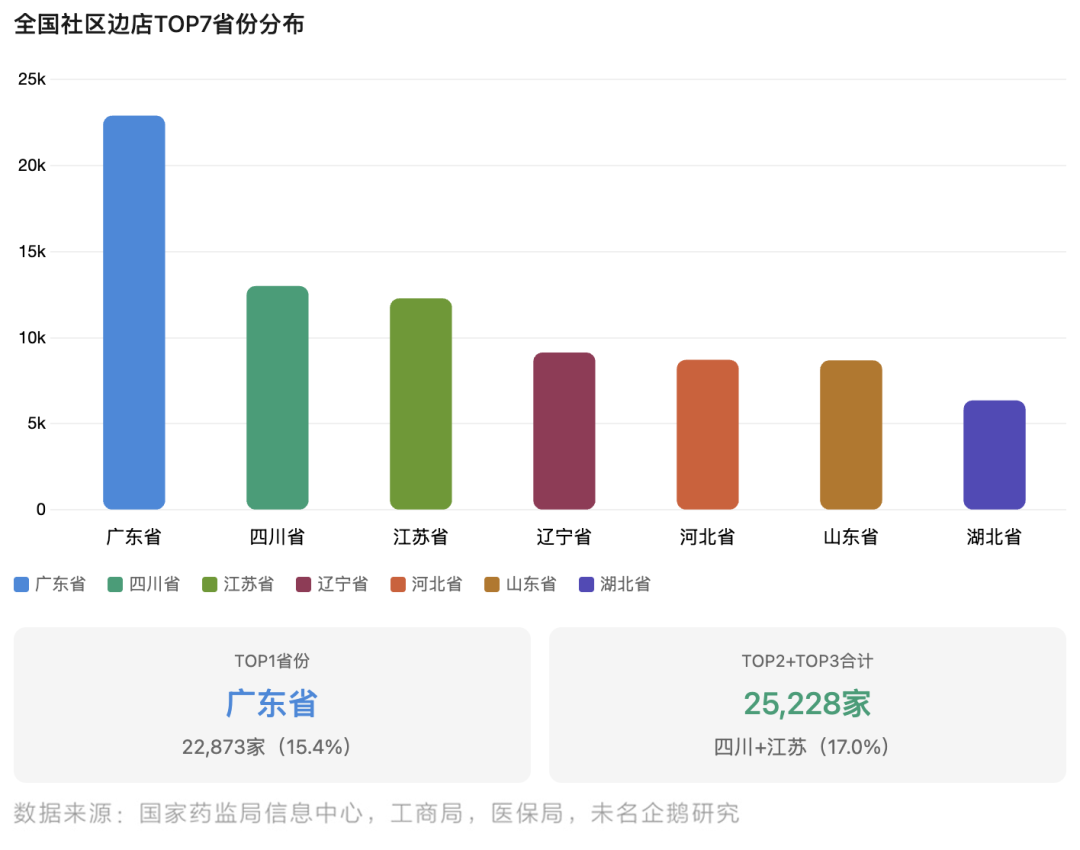
Guangdong alone accounts for one-sixth of China's community-adjacent pharmacies.
Sichuan and Jiangsu follow closely. Together, these three provinces account for more than 32%—if your resources are limited, they should be your priority markets.
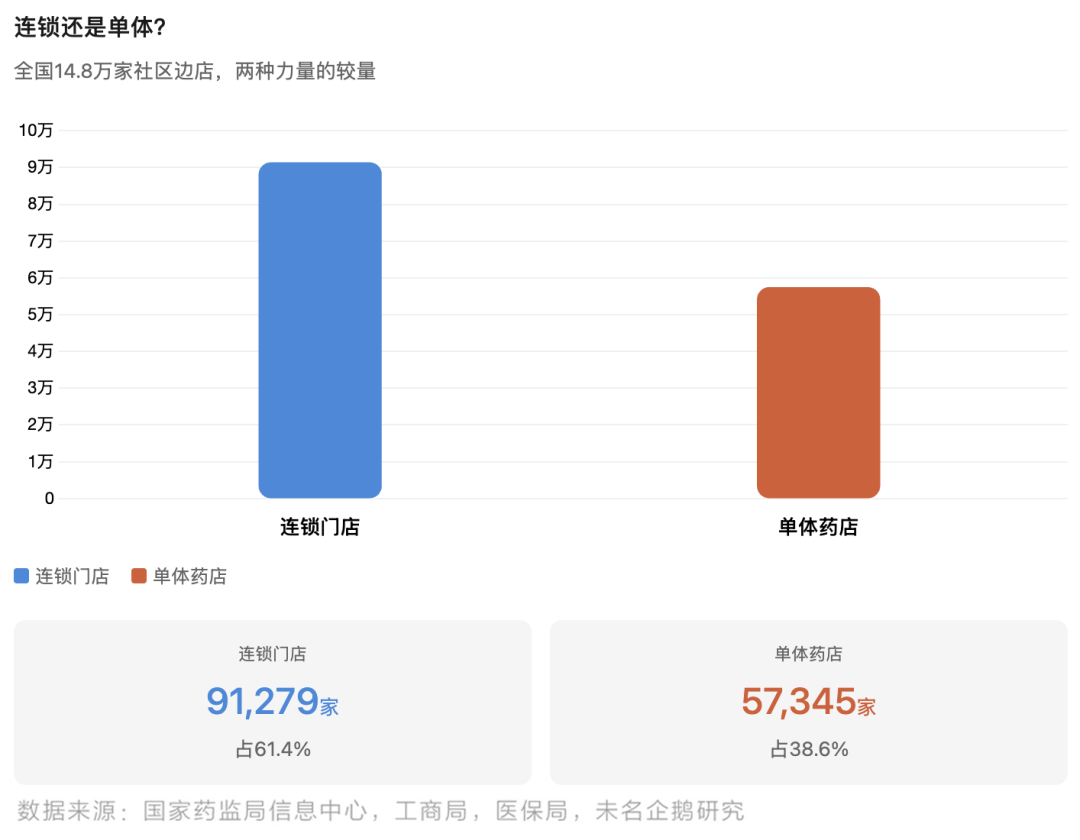
Chain or Independent?
Among China's 148,000 community-adjacent pharmacies:
- Chain stores: 91,279, accounting for 61.4%
- Independent pharmacies: 57,345, accounting for 38.6%
Chains make up the majority, but independents are far from few. Nearly 40,000 independent community-adjacent pharmacies occupy gaps beyond chain coverage and form the true capillaries of lower-tier markets.

Scan to Contact Weiming Penguin
Phone:13717915751 Email:contact@tenez.cn
About the Series
“Monday Data Coffee” is produced by Weiming Penguin. Every Monday at 7 a.m., a cup of “data coffee” is ready when you open WeChat. With 52 editions a year, this light, frequent briefing lets you keep your finger on the industry's pulse during your commute.
Core value: One cup a week to refresh your mind, using high-value data to spark deeper thinking about the industry.
Sources: Information Center of China's National Medical Products Administration; administration for industry and commerce; healthcare security administration; Weiming Penguin Retail Outlet Dictionary. Corrections to any errors or omissions are welcome!
Disclaimer: This article is intended solely to share pharmaceutical information and does not constitute investment advice or recommendations for decision-making.