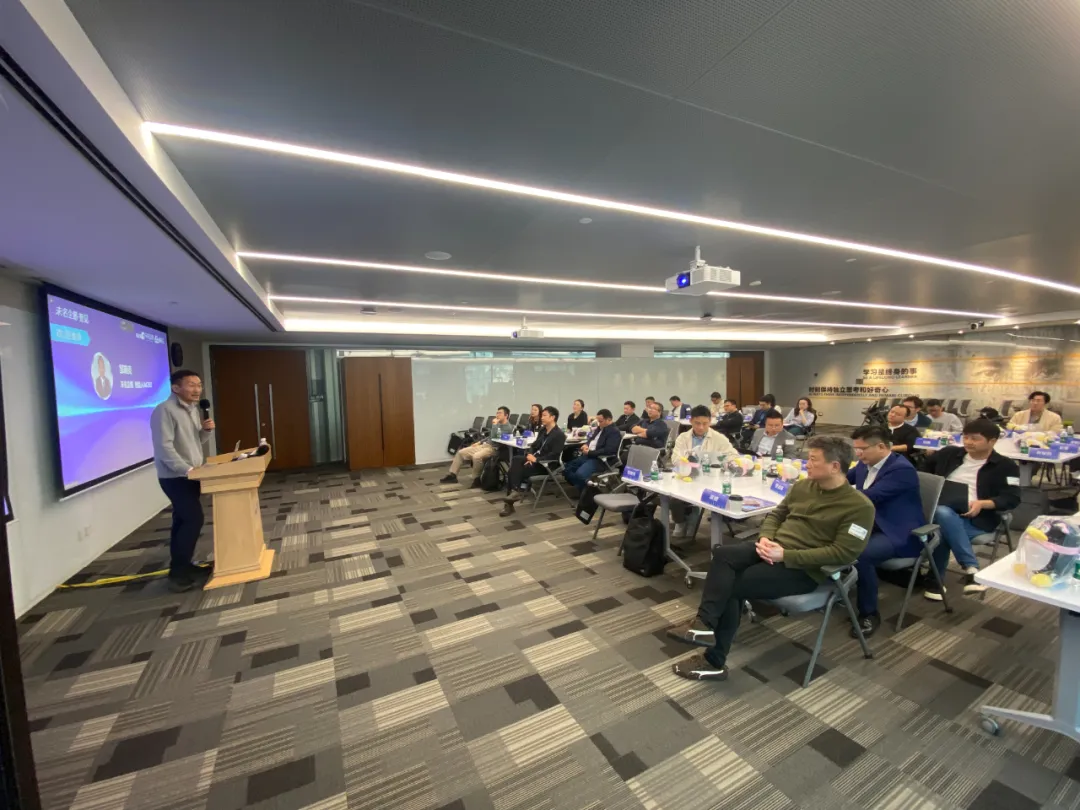
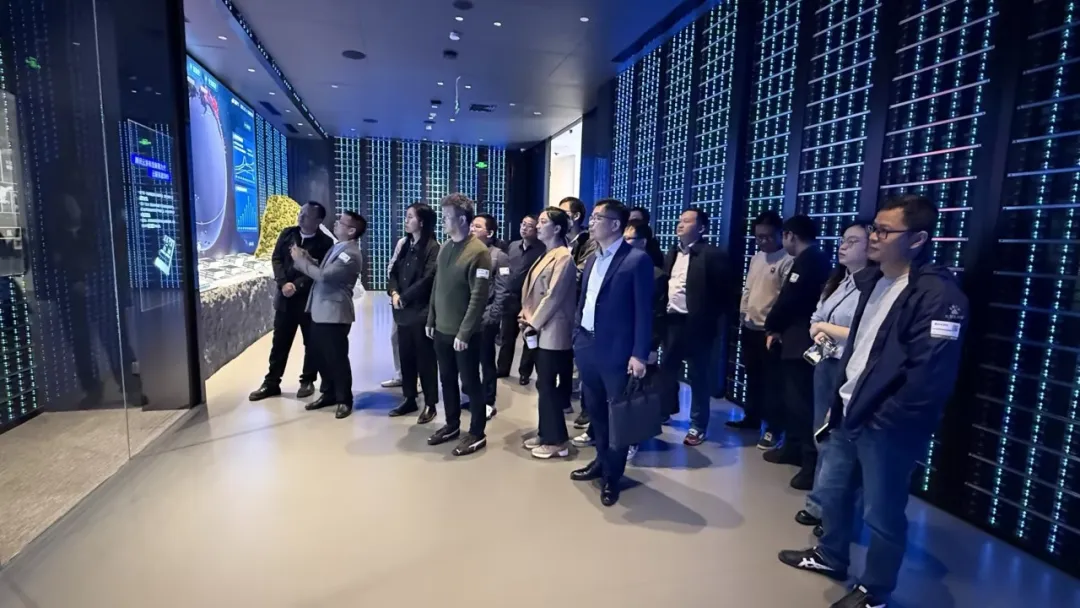
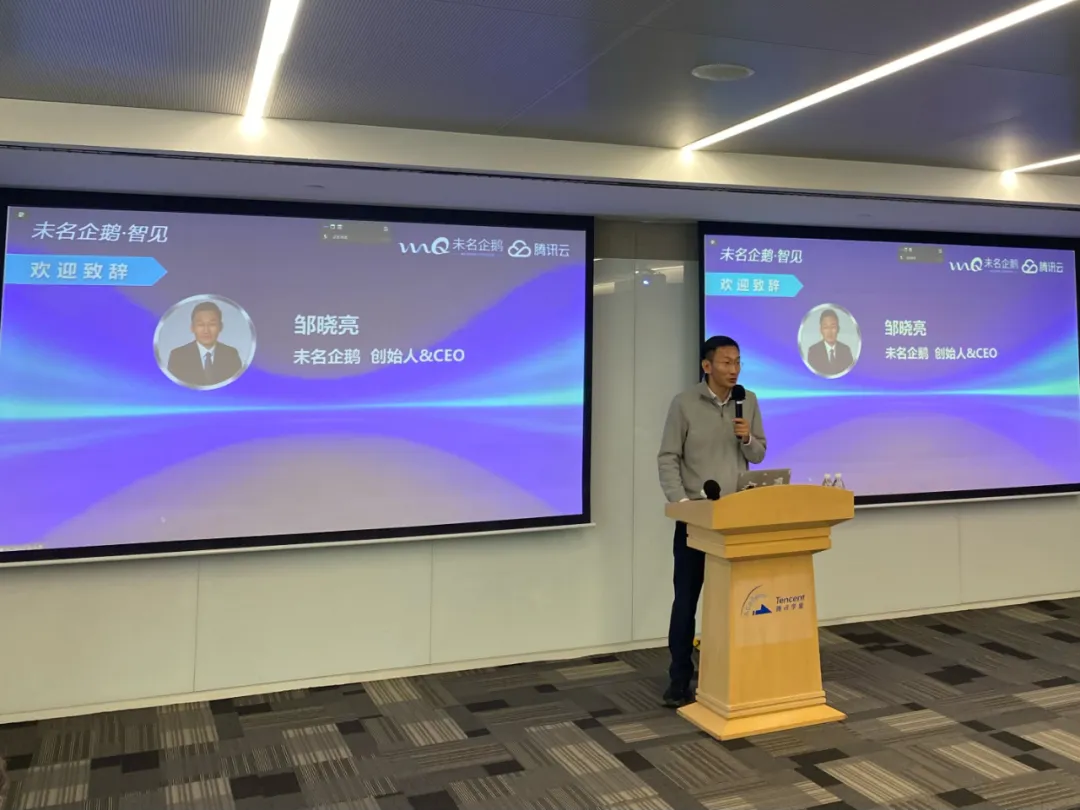
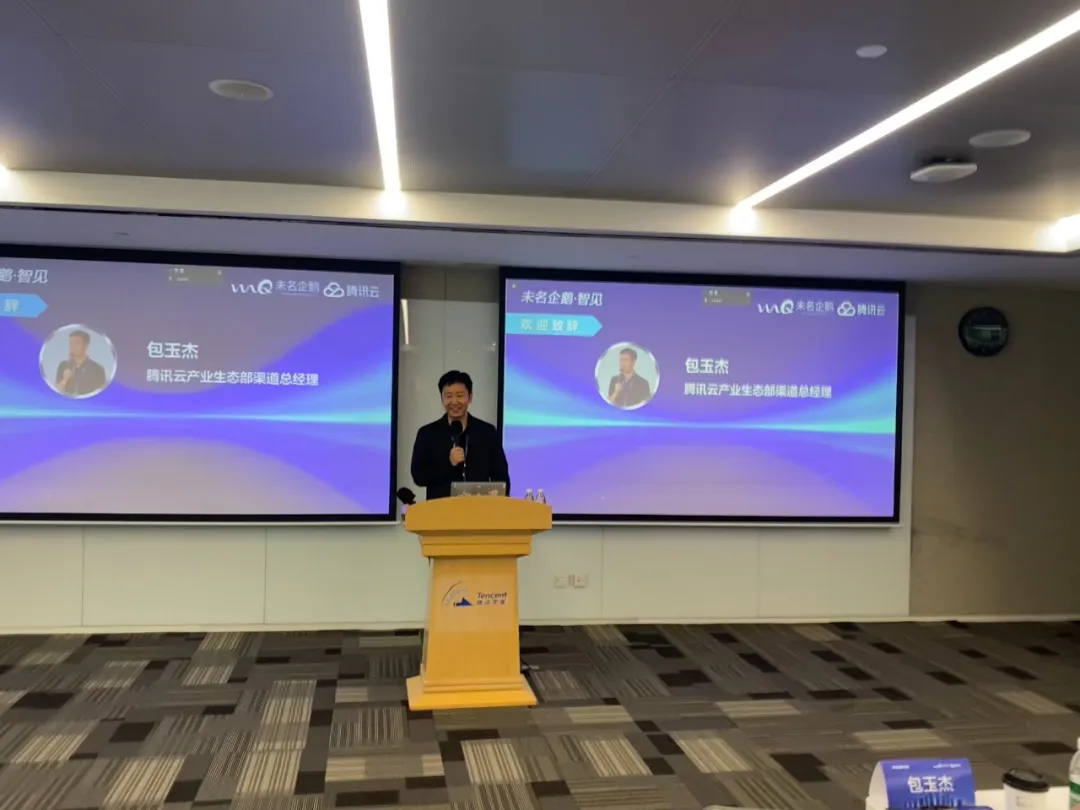
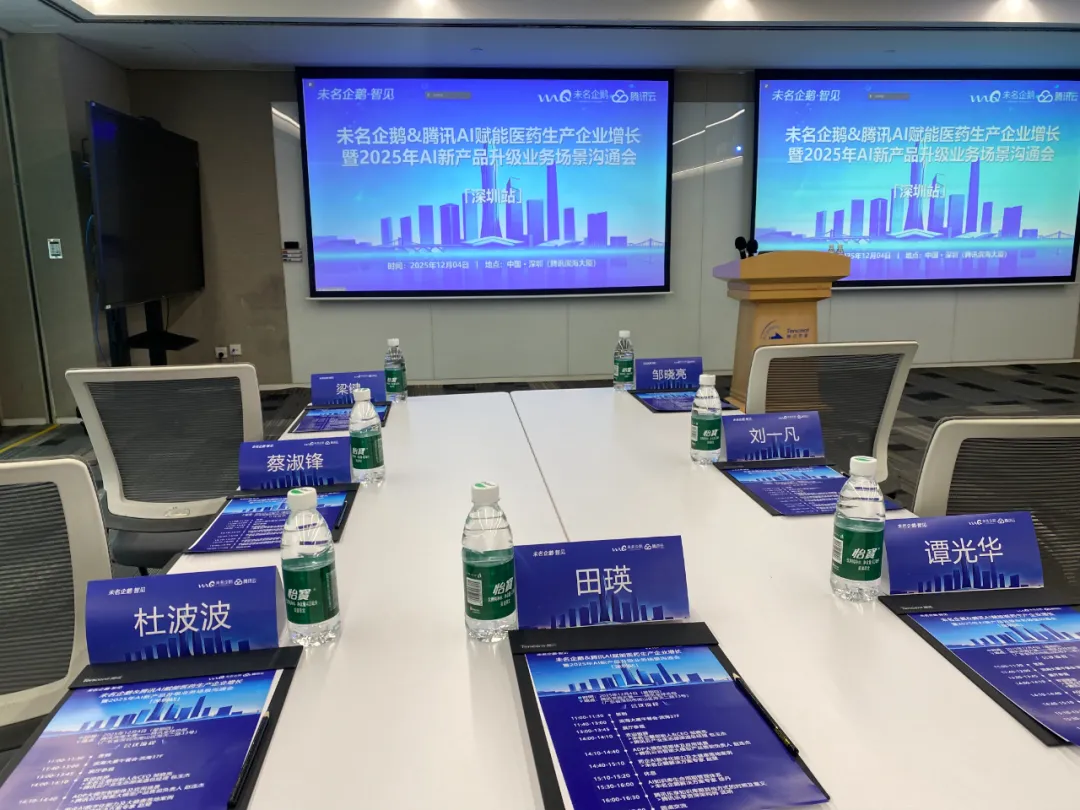
The entire event was moderated by Tian Ying, Co-founder & President of Weiming Penguin. In her opening remarks, she explained the choice of a “closed-door, small-group, substance-focused” format: “We believe that real value comes from deep thinking, candid exchanges, and actionable steps. AI is now reshaping industries across the board. For pharmaceutical companies, however, what matters more than technological change is always how to bring technology back to the fundamentals of business—how to turn it into tangible efficiency, verifiable results, and sustainable growth. To that end, today’s presentations follow a clear implementation path that we call the ‘AI Value Pyramid’:”
- At the base of the pyramid are “data and knowledge”. These are the soil in which intelligence grows. Without high-quality, structured data and knowledge systems, AI struggles to truly understand the industry and serve the business. We will explore how to build a trustworthy, usable data intelligence foundation.
- In the middle of the pyramid are “models and platforms”. These are the engines of intelligence. This layer addresses how to integrate large models deeply with the industry and align technology platforms with enterprises’ actual circumstances.
- At the top of the pyramid are “scenarios and applications”. This is where intelligence delivers value. Today, we will see how AI takes the form of individual agents and solutions, working in specific areas such as R&D, production, sales, and service to solve real pain points.
Progressing from “foundations” to “scenarios” and connecting “technology” with “business” is the practical path for pharmaceutical companies embracing AI. Next, experts from Tencent Cloud, Tencent Lexiang, and Weiming Penguin will give systematic presentations along this path. They bring not only forward-looking technological perspectives but also thinking and practices validated in the industry. We hope today’s exchanges will let everyone arrive with inspiration and leave with methods. Let us explore together how technology can truly serve people, industry, and the future of Healthy China.
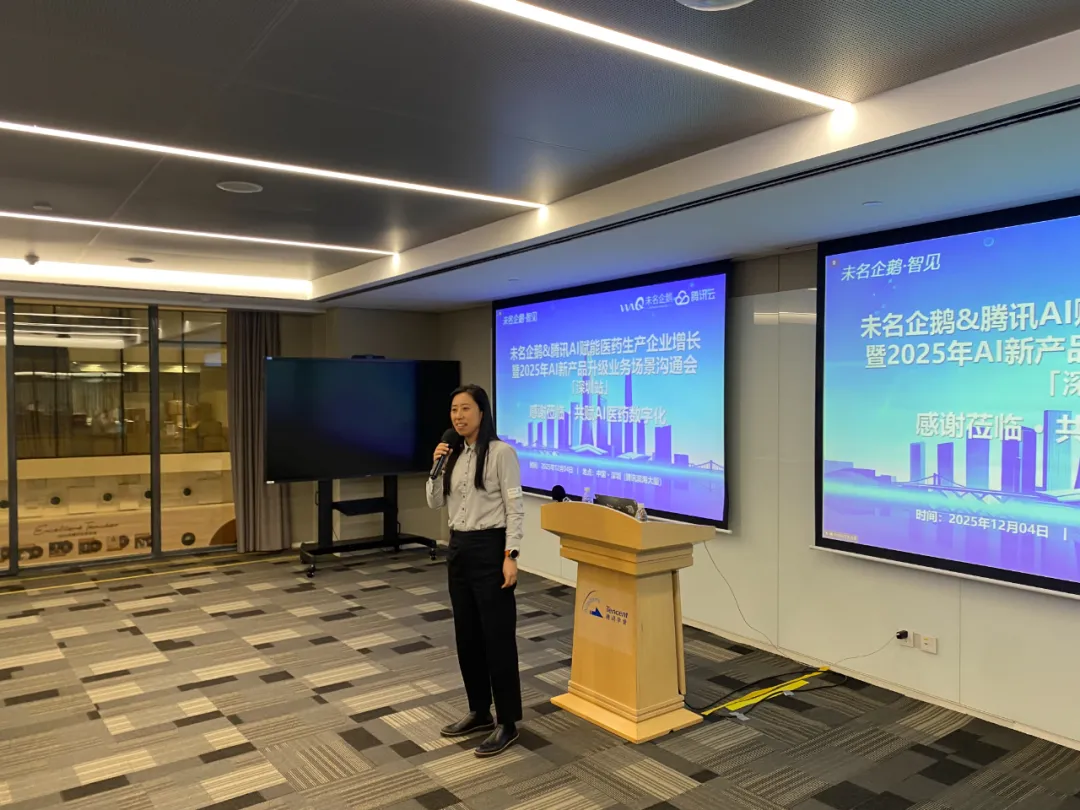
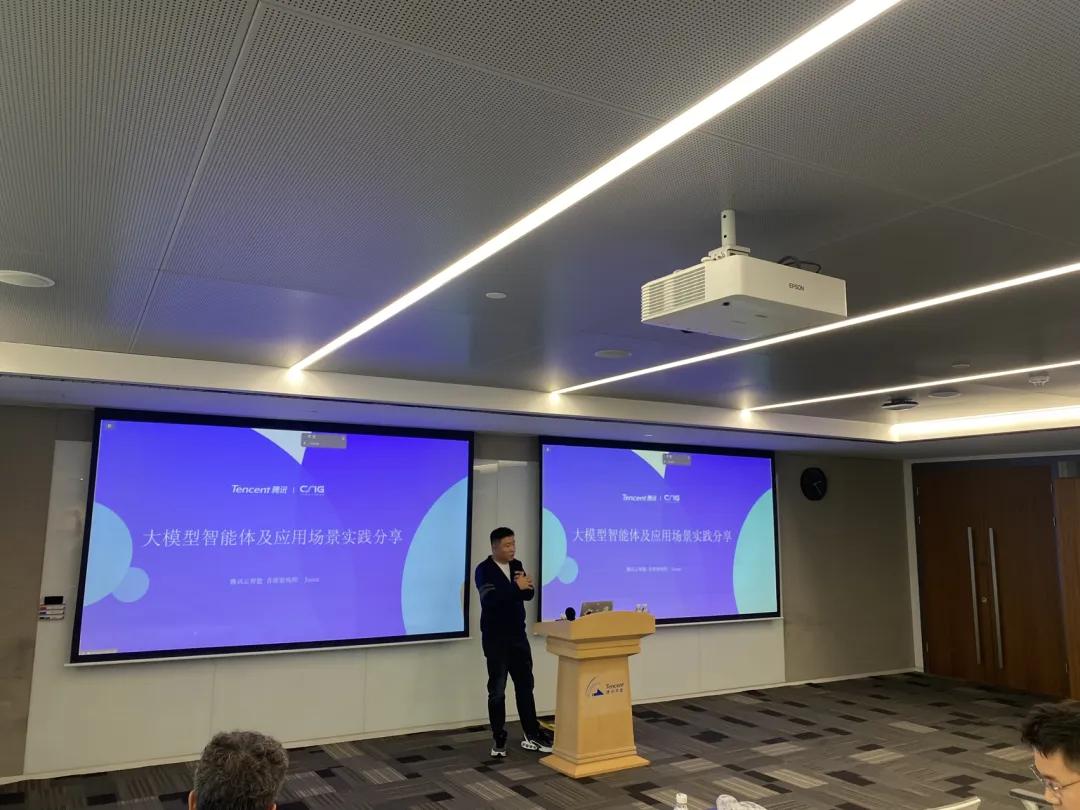
Jason, Senior Presales Architect for Intelligent Large Model Products at Tencent Cloud, presented “ADP Large Model Agents and Practical Application Scenarios.” He introduced Tencent Cloud’s end-to-end large model capabilities and its dual-track strategy of proprietary Hunyuan models and open-source large models. Its agent strategy spans three layers—ecosystem, development, and infrastructure—and its overall capabilities have been recognized through testing by China’s Ministry of Industry and Information Technology. He also detailed enterprise large model architecture and 100 implementation scenarios, focusing on five major agent scenarios in healthcare and three modes of agent development. He shared practical examples using RAG, workflow, and Agent approaches, including a health assistant and a Sinotrans DHL workflow.
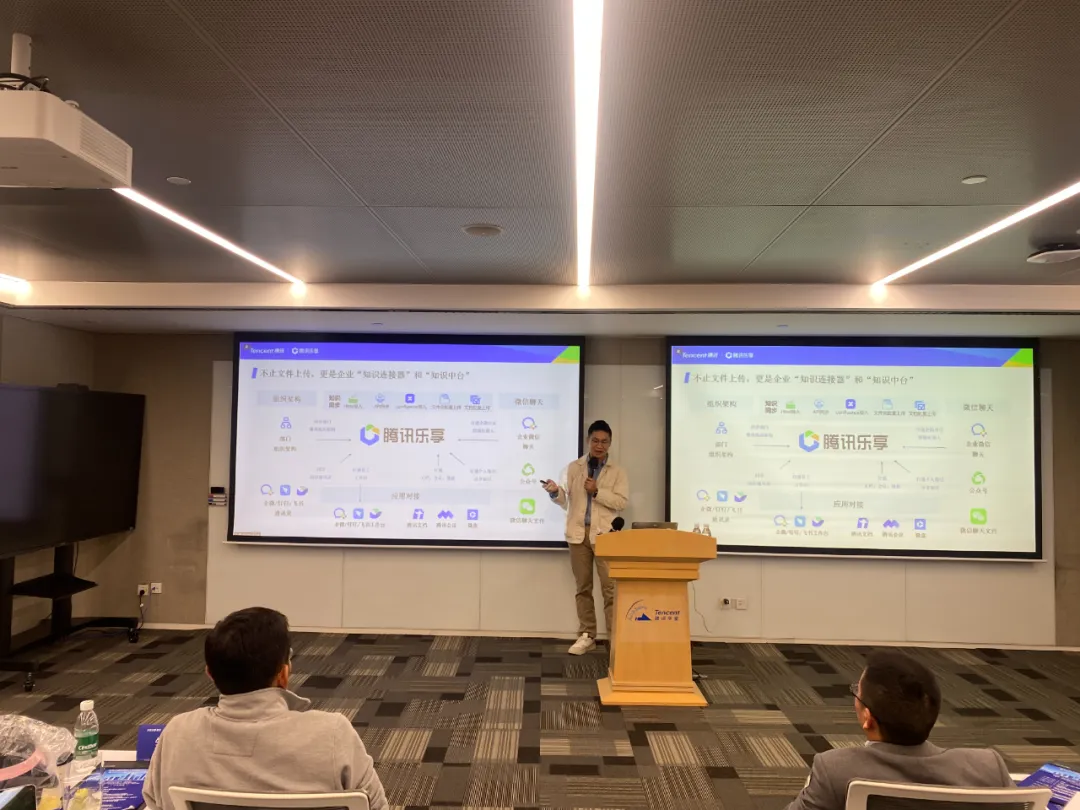
Ray, Senior Architect at Tencent Lexiang, presented “The Essential Path to an Intelligent Leap for Pharmaceutical Companies,” sharing practices and insights on building AI knowledge bases. He argued that the focus of large-model AI implementation has shifted to scenario-specific applications, calling knowledge bases the “core repository” of company-specific knowledge and the “new infrastructure” of the large model era, capable of turning a “document warehouse” into an “enterprise brain.” He also analyzed five typical knowledge management challenges facing pharmaceutical companies, introduced the multi-scenario integration of Lexiang knowledge bases with the WeCom ecosystem and its full-lifecycle management system, and proposed a three-part engine of intelligence: “knowledge bases + agents + large models.” He shared relevant practical cases and emphasized the service value of Tencent Lexiang’s 17 years of knowledge management experience.
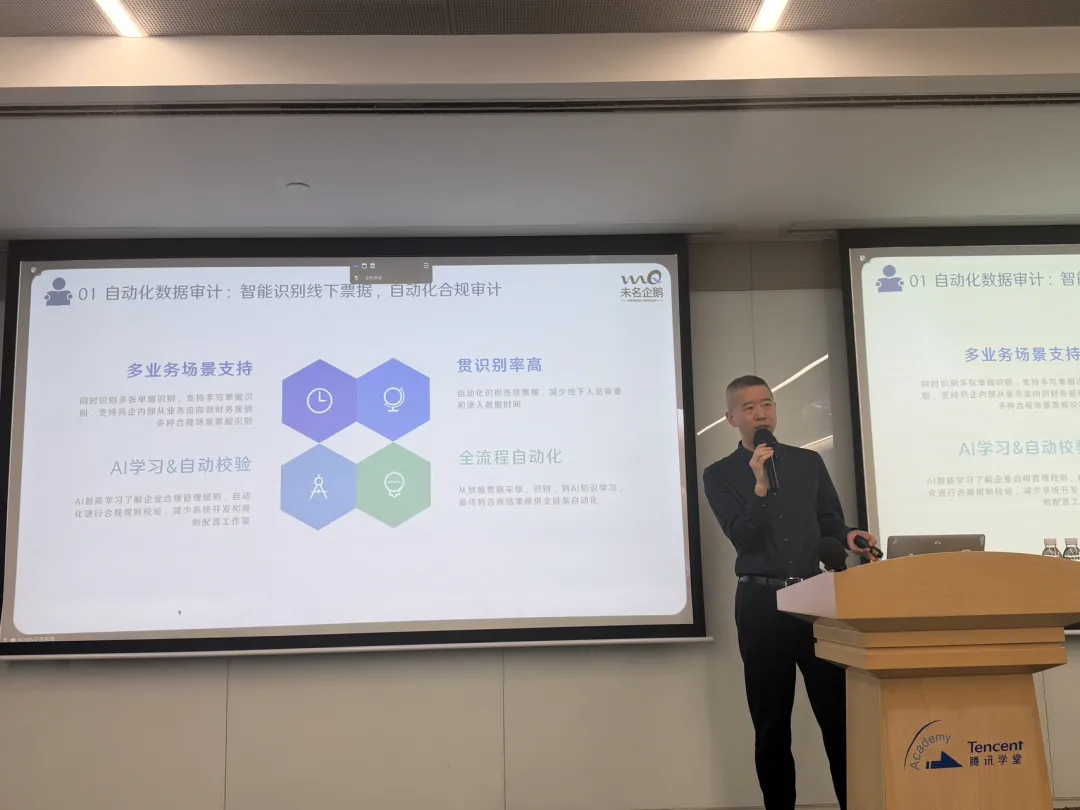
Figo, a Solutions Expert at Weiming Penguin, presented “AI Digital Capabilities for Pharmaceutical Companies and Healthcare Industry Implementation Cases.” He first outlined Weiming Penguin’s pharmaceutical digitalization blueprint and long-term service system, developed while serving more than 100 leading pharmaceutical and medical device clients. He then analyzed industry trends—including pharmaceutical companies’ greater emphasis on practical AI digitalization scenarios and the need to evaluate implementation results—and diverse application needs. He also introduced foundational applications such as AI knowledge bases and conversational data queries, along with six categories of typical AI agent cases, including automated data auditing and sales forecasting. Finally, he emphasized that data is central to AI applications and detailed the company’s comprehensive data resources, patented data cleansing technology, core products such as Zhongduantong®, and proprietary industry technology core.
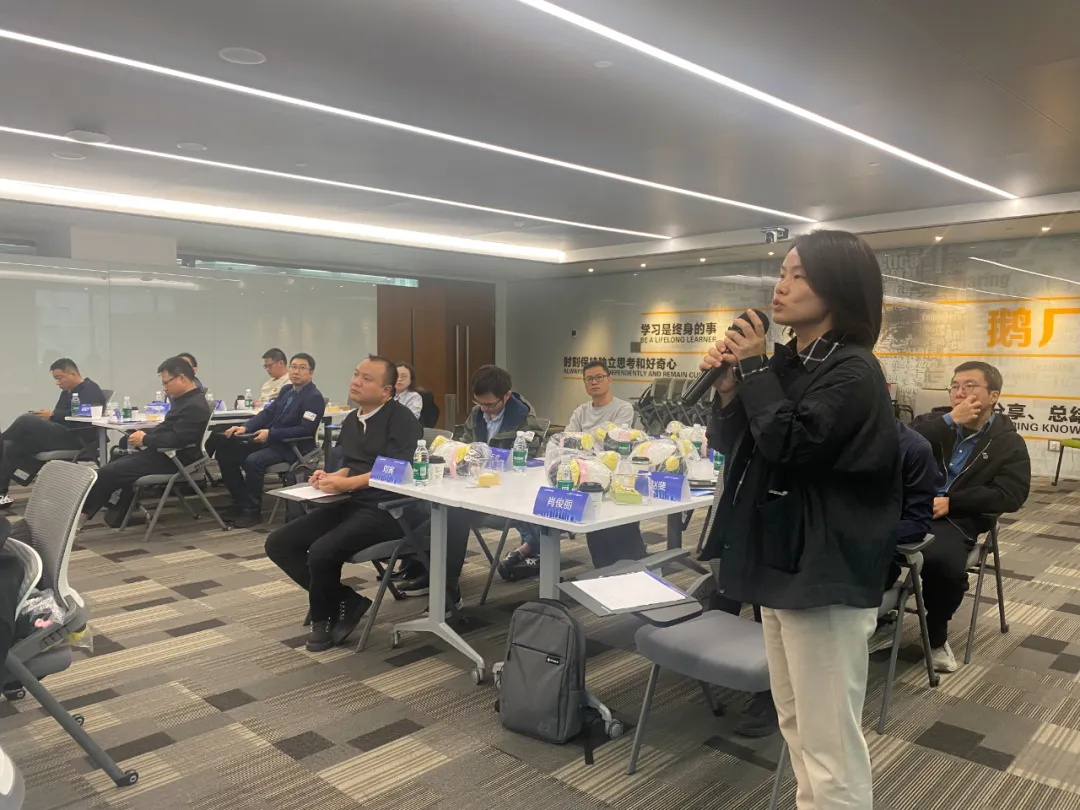
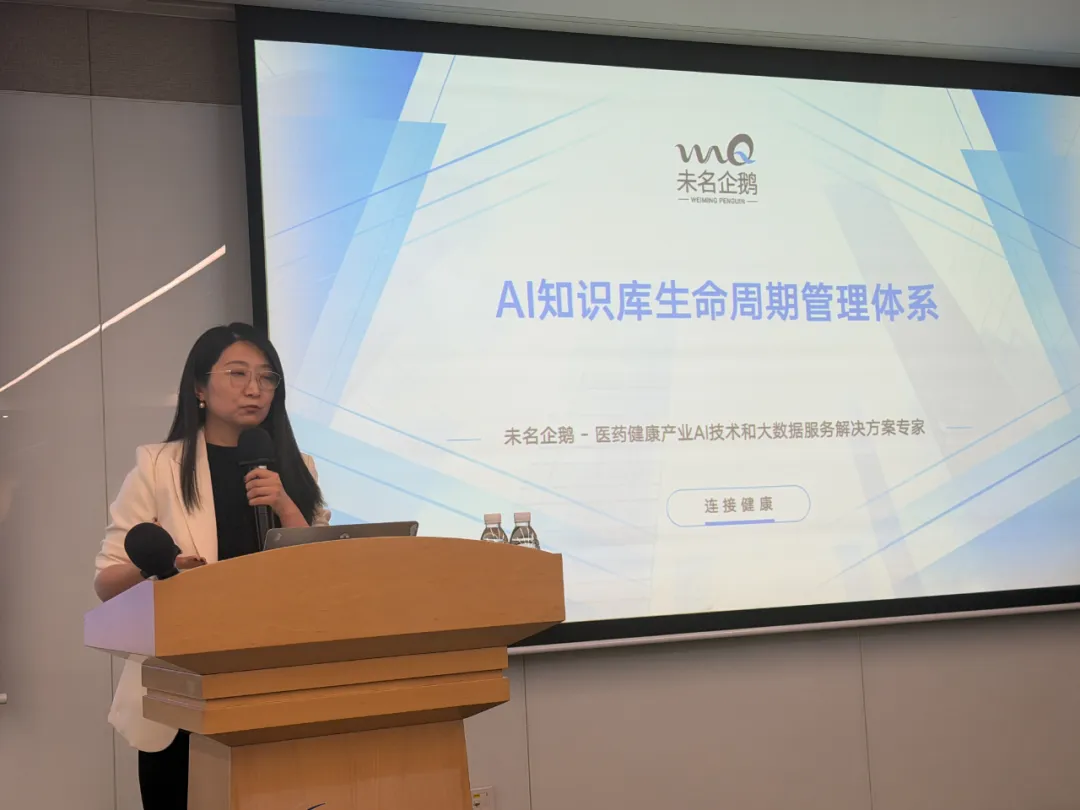
Viola, a Solutions Expert at Weiming Penguin, delivered presentations on “AI Knowledge Base Lifecycle Management Systems” and “Tencent Cloud BI Products.” During the presentations, she exchanged views with Xiao Junli, Information Director at Zhongzhi Pharmaceutical Group.
In the AI knowledge base session, she first explained the industry significance of DeepSeek’s surge in popularity, outlined the “digitalization–centralization–intelligence” roadmap for enterprise knowledge management, and identified pharmaceutical companies’ pain points in question answering. Drawing on optimization cases at pharmaceutical companies, she then offered practical knowledge base optimization advice, including data structure improvements, and laid out a full-lifecycle management system featuring multidimensional classification and code management. In the Tencent Cloud BI session, she explained its end-to-end BI capabilities and advantages such as connectivity to multiple data sources. She also introduced Chat BI features including NL2DSL and intelligent attribution, along with recommendations for building conversational data query capabilities.