Penguin Geeks | AI-Driven Business Upgrades: Highlights from a Sharing Session on the Pharmaceutical Digital Task Engine
Article images may contain Chinese text.
I. Technology Powers Pharmaceutical Digitalization: An AI Sharing Session Focused on Efficiency
As digital transformation accelerates in the pharmaceutical industry, AI is becoming key to overcoming bottlenecks in business efficiency. With technological innovation always at its core, Weiming Penguin regularly organizes internal sharing sessions featuring technology enthusiasts and customer case studies. These sessions strengthen the Penguin team's overall intrinsic motivation in technology and R&D and provide outstanding employees and teams with a platform to showcase their work, gain experience, and grow. In turn, they improve the AI-powered digital service experience for pharmaceutical customers and indirectly support potential improvements in customers' new quality productive forces.
Recently, Penguin Java engineer YIFU delivered an AI-themed session titled “Building Our Own Business ‘Task Engine.’” The session brought fresh ideas and momentum to colleagues in the data collection team and across the company's technology and R&D functions, putting technology to work in real pharmaceutical business scenarios.

II. Core Session: Building the Task Engine and Adapting It to Pharmaceutical Scenarios (Exploration and Practice with AI Agents and an MCP Service Architecture)
01
Technical Evolution: Exploring the Path from Manual Operations to Early Automation
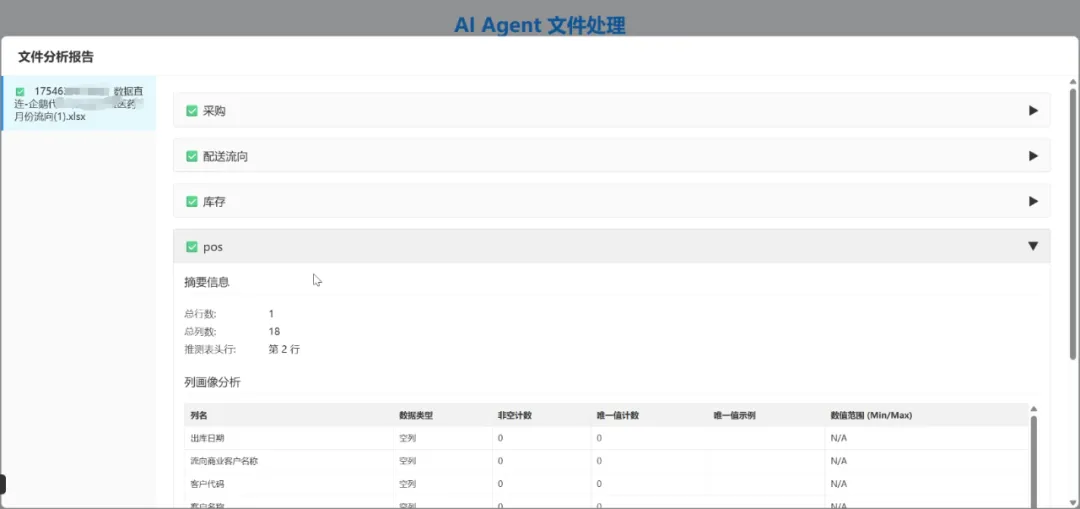
In the early stages of building the task engine, data processing relied entirely on manual work: files were downloaded from emails, processed manually in Excel, and then uploaded to the system. The process was cumbersome and error-prone. To address this, the team first converted manual operations into script execution, reducing local manual steps. It then further optimized script replay to reduce reliance on large language models, lower costs, and improve stability, laying the groundwork for the AI task engine.
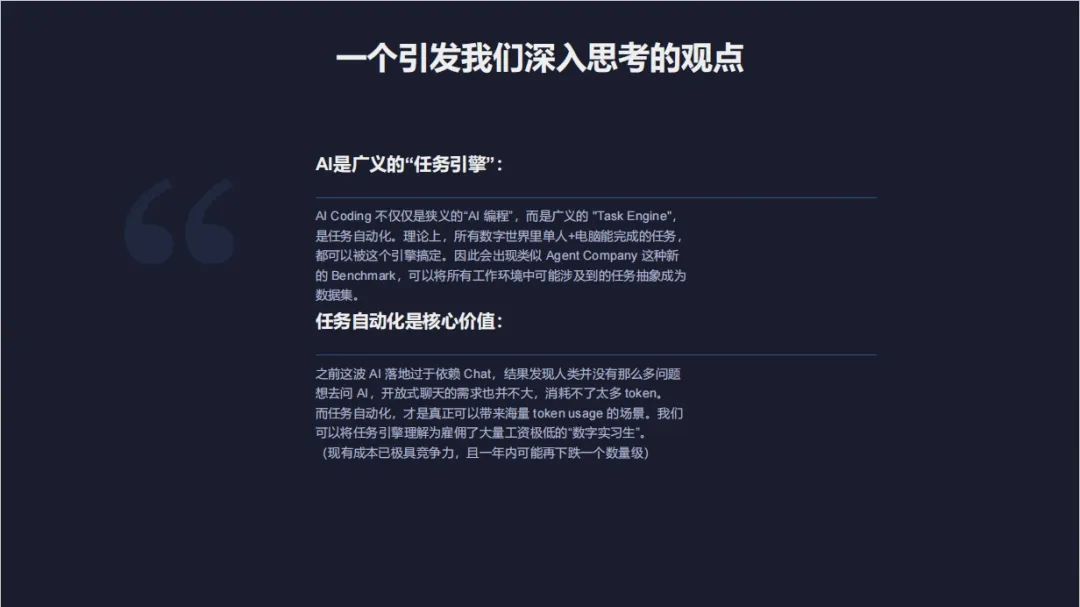
A. Core Concept: AI as a Broadly Defined “Task Automation Engine”
AI Coding is not simply “AI programming” in the narrow sense, but a broadly defined “task engine” that can, in theory, automate every task in the digital world that one person with a computer can complete. Compared with AI implementation models that rely on open-ended chat, task automation is where enormous value can truly be created—much like hiring large numbers of low-cost “digital interns,” with substantial room for costs to fall further in the future.
B. A Breakthrough in Pharmaceutical Scenarios: From Cumbersome Manual Work to AI Automation
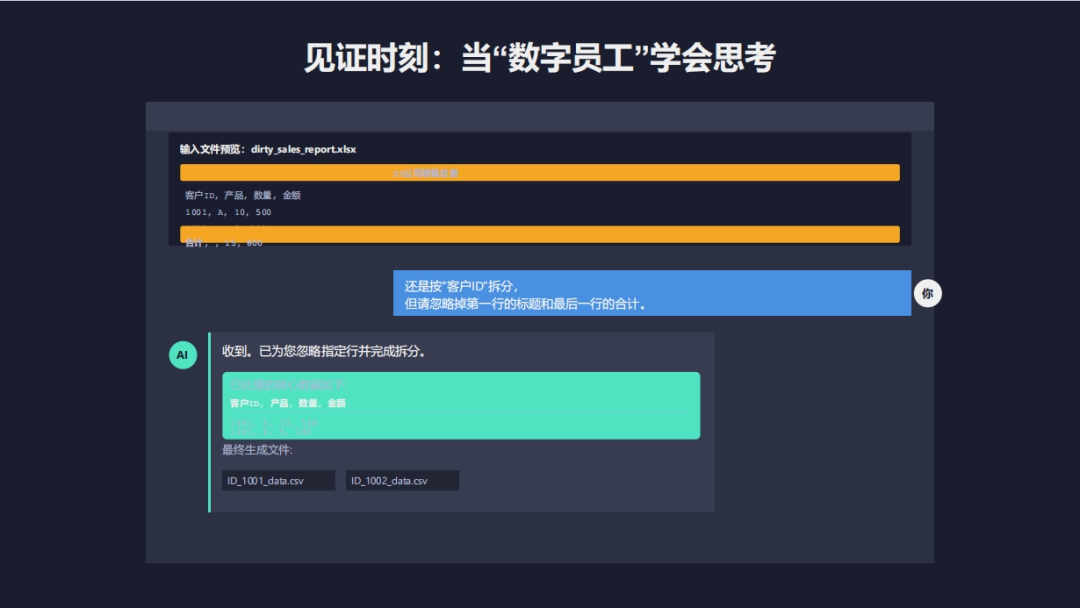
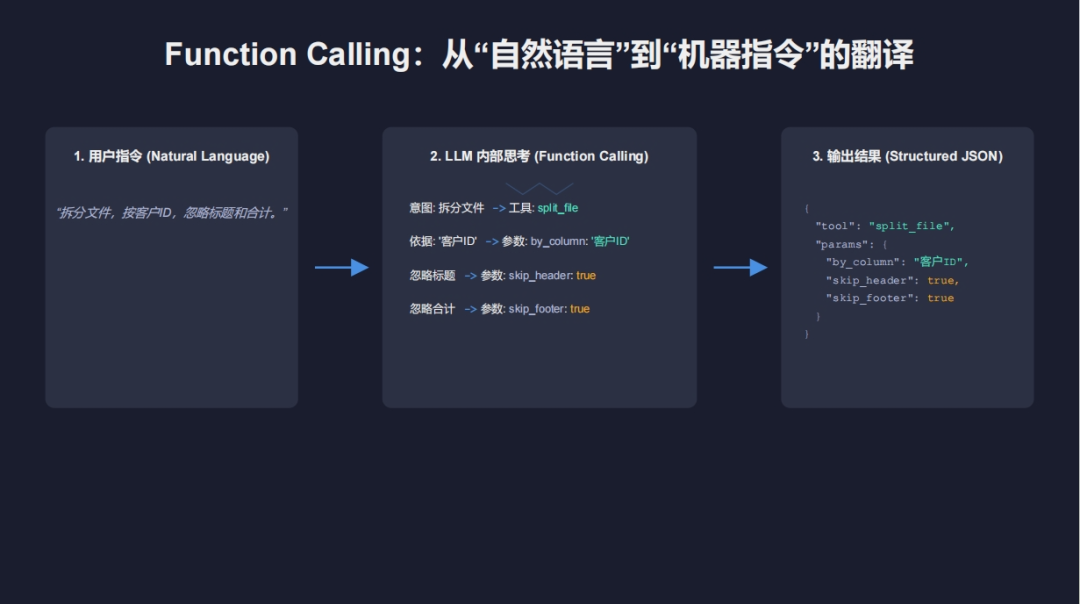
In pharmaceutical data processing, customers send ERP data by email in a variety of formats. Implementation colleagues have to manually download the files, adjust headers and total rows, and organize the sequences before loading the data into the database—a repetitive and time-consuming process. To address this, the team built a task engine using “AI agents + MCP services” to automate the entire workflow. Users only need to enter a natural-language instruction, such as “Split the file by the distributor column” or “Ignore the header and total rows, then split by customer ID.” The engine can quickly process the data and generate results. It can also save the workflow as a script for one-click reuse from the script library, greatly improving efficiency.
C. Technical Foundations: Function Calling and the MCP Architecture
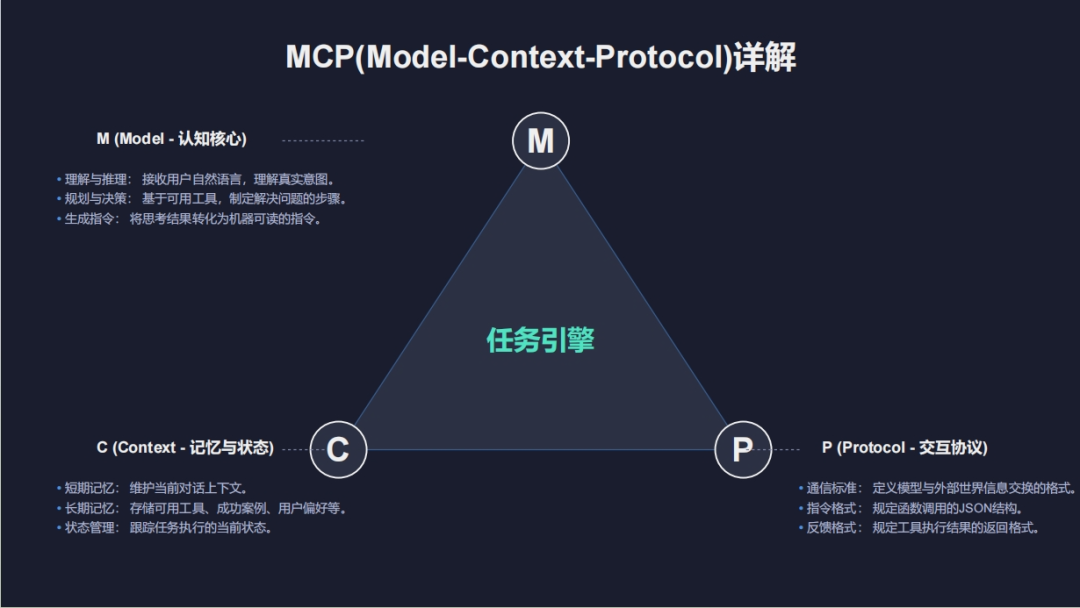
The task engine's core capabilities rest on two technical foundations. The first is Function Calling based on the Deepseek v3 model, which accurately translates “natural language → structured JSON machine instructions.” The second is an in-house MCP (Model-Context-Protocol) service architecture: Model understands intent, plans steps, and generates instructions; Context maintains conversation memory, tool examples, and task status; and Protocol defines communication formats and standards for instructions and feedback. A script is essentially a sequence of instructions generated through the MCP loop. The first execution relies on LLM reasoning, while subsequent reuse directly replays the instructions, lowering costs and increasing speed.
D. Value and Roadmap: Greater Efficiency and a Team of “Digital Employees”
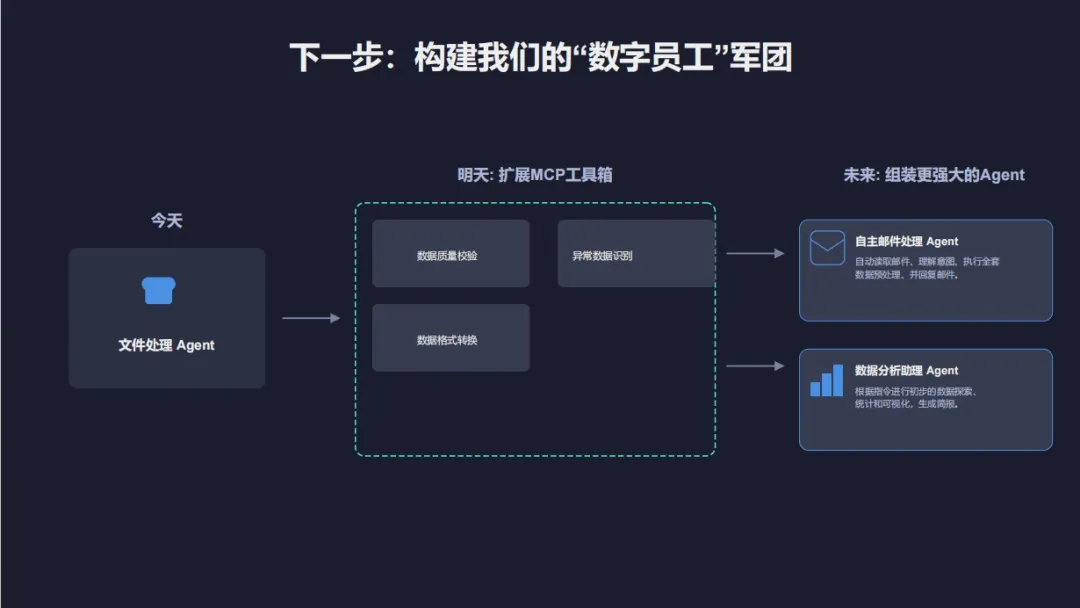
The task engine currently delivers its core value through significant efficiency gains, use with no prerequisite expertise, and extensible capabilities. Further expansion is planned: in the short term, the MCP toolbox will be enriched with functions such as data validation and anomaly detection; in the long term, the team will assemble an autonomous email-processing agent that automatically reads emails, processes data, and sends replies, as well as a data analysis assistant agent for data exploration, visualization, and briefing generation, building a team of “digital employees.”
Drawing on hands-on experience, the team is incorporating the task engine's capabilities into standardized company workflows, with a focus on upgrading email-based data collection to achieve deep automation throughout processing and increase the workload staff can handle. Since R&D began in the second half of last year, the task engine has been deployed in pharmaceutical scenarios. Going forward, the team will continue exploring where AI and business intersect, unlocking further efficiency gains through technical iteration.
III. Conclusion: Continuing to Advance Technology and Embarking Together on a New Pharmaceutical Digitalization Journey
This session was not only an exchange of technical experience, but also a practical expression of Weiming Penguin's commitment to “reshaping the pharmaceutical industry with AI technology.” Moving forward, the Engineering Technology Department will continue to deepen the integration of AI with pharmaceutical business operations, providing solid support for pharmaceutical companies' digital transformation through more scenario-specific technological innovations. We look forward to more sparks of innovation from Penguin's technology and R&D team as it writes a new chapter in pharmaceutical digitalization through code and algorithms!
