Penguin Geeks | Say Goodbye to “Hallucinations”! RAG Gives Enterprise AI the Superpower of Real-Time Knowledge
Article images may contain Chinese text.
0. When AI Meets Specialized Fields, How Can We Make Machines “Truly Understand the Industry”?
Recently, the explosive growth of large language models (LLMs, such as DeepSeek and ChatGPT) has made it ea-
sy for ordinary people to experience the magic of AI conversations. Whether writing poetry, coding, or answering everyday questions, these models seem capable of anything. But have you ever run into situations like these—
· You ask AI about the latest industry policies, but it has no idea?
· You ask AI to analyze a specialized data research report, but its conclusions are full of holes?
· You input a long piece of business text, but the AI keeps cutting off partway through, losing key information?
· You worry that asking a question will upload internal company rules to the cloud, where others might see them?
The core problem is this: a large model’s knowledge base remains forever in the “past tense” of its training, while enterprise and specialist knowledge keeps evolving. Faced with long texts and professional terminology, it either “cannot remember” or “cannot understand.” More importantly, sensitive data cannot safely be entrusted to third-party platforms.
Is there a technology that can preserve a large model’s powerful reasoning capabilities while enabling it to “learn” our private knowledge in real time and ensuring that data stays on local systems?
The answer is RAG (Retrieval-Augmented Generation). It is like giving AI an “intelligent bookshelf”: enterprise documents, images, tables, and other materials are first broken down into machine-readable “knowledge fragments.” When answering a question, the system dynamically retrieves relevant passages and combines them with a large model to generate an accurate answer. With local deployment, this “bookshelf” is completely under your control—no internet connection and no data uploads required, bringing security and intelligence together.
1. LLM Models and RAG Models
How LLMs Generate Output: Why Does AI “Make Things Up”?
The underlying logic of large language models is a “mathematical probability game” based on vast amounts of text data. Put simply, they analyze relationships between words in existing texts to predict the most likely next word—much like a “supercharged version of your phone keyboard’s predictive text.”
This approach has two characteristics:
· Answers are not fixed: the same question may produce different answers because the model samples from a probability distribution each time.
· “Hallucinations” may occur: when a question falls outside the scope of its pretrained knowledge, the model may use probabilities to “invent” answers that sound plausible but are actually wrong, such as fictitious legal provisions or fabricated data.
RAG: Definition and Core Idea
RAG (Retrieval-Augmented Generation) is an AI enhancement technique that combines “looking up information + writing an answer.” It addresses LLM limitations in two steps:
1. Retrieval: quickly find content relevant to the question in an external knowledge base, such as enterprise documents or industry reports.
2. Generation: feed the retrieved materials into the LLM so that it generates an answer based on the latest, most accurate information.
The core idea: turn AI from a system that “memorizes by rote” into one that “looks things up and uses them immediately,” using an external knowledge base to compensate for the limitations of an LLM’s static knowledge.
Common RAG Use Cases
· Enterprise knowledge management: instant Q&A over internal documents, such as looking up the latest expense reimbursement policy or product manual.
· Specialized services: interpreting legal provisions, analyzing medical reports, and summarizing financial research reports.
· Intelligent customer service: dynamically answer customer questions using the latest product information, reducing the need for human intervention.
2. How Does RAG Turn Documents into Content a Large Model Can Understand?
The core of RAG is “retrieve first, then generate.” Its workflow can be divided into three steps, like an “intelligent assistant that knows how to look things up”:
Breaking Down Documents: From “a Book” to “Knowledge Cards”
· Chunking: divide long texts, such as enterprise documents and industry reports, into short segments, such as paragraphs or sections, to avoid information overload.
· Vectorization: use an embedding model to convert each text segment into a vector—a “semantic fingerprint” consisting of a set of numbers—so that machines can understand the text’s meaning.
· Database storage: store all vectorized “knowledge cards” in a vector database, similar to the indexing system of an intelligent library, to support fast retrieval.
Dynamic Retrieval: Precisely Matching Questions with Knowledge
· Question vectorization: when a user asks a question, first convert it into a vector and calculate its semantic similarity to the “knowledge cards” in the database.
· Retrieve relevant passages: select the text segments most relevant to the question, such as the Top 3, from the database to serve as references for answer generation.
Augmented Generation: Combining Knowledge to Produce Reliable Answers
· Prompt engineering: combine the question and retrieved knowledge passages into a prompt, for example: “Answer the question using the following information: [knowledge passages] + Question: xxx.”
· Large-model inference: feed the prompt into the large model to generate an accurate answer grounded in actual documents rather than relying on pretrained memory.
3. What Can a RAG Knowledge Base Do for Us?
For Technical Development: More Efficient Development and Data Processing
· Developers often cannot know every detail of a large system. Traditionally, they search through documentation or rely on experience. A RAG knowledge base can conveniently provide business processes and development documentation for reference, greatly reducing communication costs and trial and error.
· When processing data, RAG can quickly retrieve similar cases to help developers identify potential data conflicts or gaps in business logic.
Helping AI Truly Understand the Business: From Data to Insights
· The value of pharmaceutical data lies in business insights—for example, analyzing the efficiency of channel coverage for a class of drugs or forecasting inventory turnover cycles. General-purpose AI models understand the data merely as sales figures, while RAG trained on an industry knowledge base can automatically generate in-depth analyses that incorporate pharmaceutical industry characteristics, such as cold-chain transportation requirements and links to healthcare security policies.
· For example, when asked about “coverage of a particular cancer drug in second- and third-tier cities,” RAG can not only extract the data but also link it to local healthcare institution directories and healthcare security reimbursement policies, and even generate visual charts, putting data directly to work in business decision-making.
New Employee Training: Getting Up to Speed Faster
· Faced with a complex pharmaceutical data system, new employees often need months of training before they can work independently. A RAG knowledge base can become a “24-hour mentor.”
· By linking policy documents and market analysis reports, it helps new employees understand the business logic behind the data.
· It provides data cleansing templates, examples of common errors, and automated code snippets.
Customer Q&A: More Professional, More Timely Responses
· When a customer asks, “What are the sales trends for a particular drug in East China?” the traditional approach requires staff to extract data from multiple systems and compile a report
· RAG, by contrast, can generate trend charts from real-time data and link them to competitor comparisons and market insights
· It can also cite data sources directly in the answer, such as “Based on distributor-reported data for Q1 2025,” to increase credibility
· Scheduled tasks can also be configured to analyze data periodically and monitor anomalies
4. How Can You Deploy It Locally?
Choosing an AI Model Assistant
· Local deployment requires an easy-to-use platform that supports customization for private deployment. For example:
· CherryStudio: an open-source platform developed in China, offering a visual interface and flexible APIs. It supports private model loading, knowledge base management, and access control, allowing the entire setup to be completed without relying on a public cloud.
· Other options, such as NextChat and OpenWebUI, can also be selected to match your team’s technology stack.
Choosing Models
LLM Model
· Open-source or commercial models, such as DeepSeek, can be selected for local deployment
· Alternatively, you can use APIs to call providers such as Chatgpt
Embedding Model
· Chinese-language use cases: BAAI/bge-large-zh-v1.5, which offers strong Chinese semantic understanding and is suitable for short texts such as drug names and distributor information.
· Long-text optimization: text2vec-large, which supports paragraph-level vectorization and is suitable for structured data such as pharmaceutical policy documents and warehouse logs.
Setup Steps
For this demonstration, we will set up CherryStudio + text-moderation-stable + DeepSeek-r1 (API) on a personal computer
1. Go to the CherryStudio official website, download the installer for your operating system, and install it
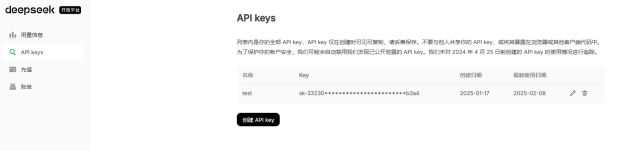
2. Go to deepseek’s official API platform to apply for APIKeys:
1. Registering with a mobile number gives you RMB 10 in free credits
2. Click APIKeys in the left sidebar, then click Create API Key. You will receive a string in the form sk-xxxx. Keep it safe, as you will not be able to view it again later
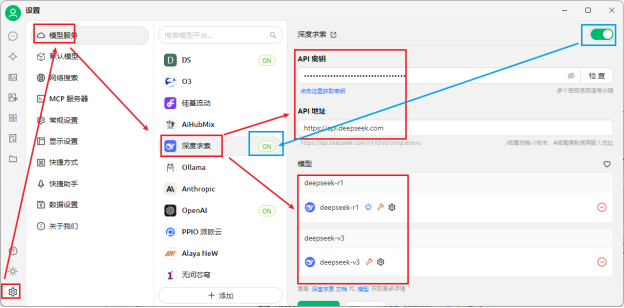
3. Open the CherryStudio client and connect to deepseek’s API service. Click Settings in the lower-left corner and enter the information shown in the image below:
1. The API key is the sk-xxxx string shown in the image above
2. The API address is fixed at https://api.deepseek.com
3. Change the models to deepseek-r1 and deepseek-v3
4. Finally, click the switch in the upper-right corner so that it displays ON
4. Connect to chatgpt in the same way:
1. Apply for access to the chatgpt API and obtain a key in the same way
2. The model name is text-moderation-stable

5. Next, configure the knowledge base:
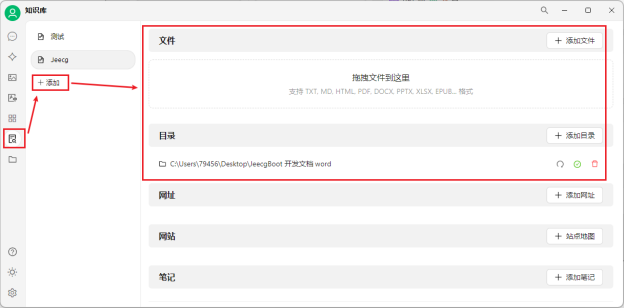
1. Click the Knowledge Base button, then Add. Select the text-moderation-stable model you just configured as the embedding model and click OK
2. Select Add Files and import the knowledge base files. Here, I selected a folder containing several Word documents
6. You can now start a conversation:
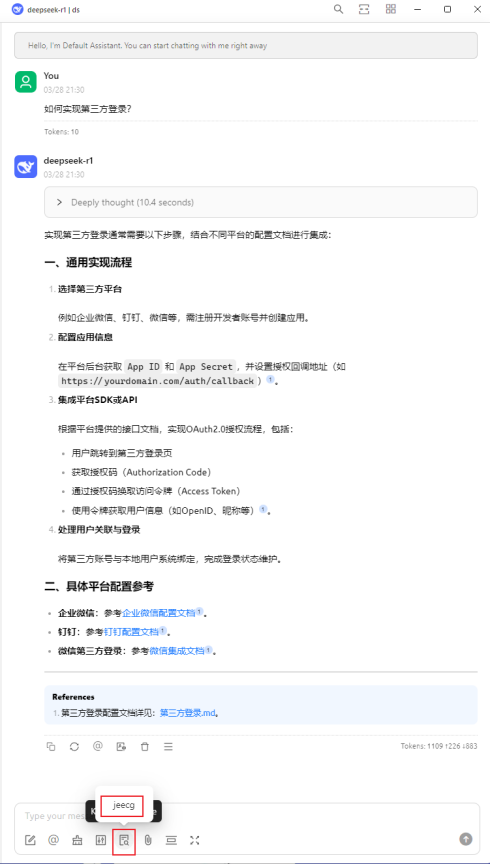
1. Click Chat at the top and create a conversation
2. Select the knowledge base below
3. Ask and answer questions about the knowledge base content
5. Further Exploration: Rankify—A Powerful Tool for Enterprise RAG Optimization
Pain Points in RAG Technology
By dynamically retrieving information from external knowledge bases, RAG effectively addresses the outdated knowledge and “hallucination” problems of traditional large models. However, practical implementation still faces many challenges:
· Delays in knowledge updates: new documents need to be chunked and vectorized again, making real-time updates within minutes difficult.
· Insufficient retrieval accuracy: a single retrieval strategy, such as vector-only search, can miss specialized terminology or long-tail expressions.
· Difficulty with multimodal processing: traditional RAG struggles to integrate structured knowledge from tables and images.
· Data silos: enterprise knowledge is scattered across CRM, ERP, and other systems, making unified retrieval difficult.
Rankify: Redefining What RAG Can Do
To address these challenges, the open-source toolkit Rankify rebuilds the RAG technology stack with an “end-to-end optimization” approach. Its innovations span three dimensions:
· Hybrid Intelligent Retrieval Engine:
o Rankify combines keyword retrieval methods such as BM25 with semantic retrieval methods such as BGE and ColBERT, automatically optimizing their relative weights to improve retrieval accuracy.
o Rankify introduces dynamic context awareness to accurately capture reference relationships in multi-turn conversations, making retrieval results more relevant.
· Dynamic Knowledge Governance System:
o It supports incremental updates, requiring only partial vectorization of new documents to synchronize knowledge within minutes.
o Its built-in table parsing engine automatically extracts predefined conceptual data, turning structured information into retrievable knowledge.
· Enterprise-Grade Enhancement Components:
o It provides standardized APIs and prebuilt connectors for seamless integration with business systems such as Salesforce and SAP.
o It integrates sensitive information filtering and fact-checking modules to ensure that generated content is compliant and reliable.
Through these innovations, Rankify not only makes RAG more practical but also enables enterprises to respond flexibly to real-world needs in complex knowledge environments.
6. Conclusion: Finding the Best Approach as Technology Evolves
As specialized fields undergo intelligent transformation, balancing data security with the value of knowledge remains a central challenge for enterprises. Traditional AI is often constrained by outdated static knowledge bases or held back by data privacy concerns. Local deployment of RAG knowledge bases is a key breakthrough in overcoming this dilemma—it transforms AI from an observer that merely “theorizes on paper” into a business partner that “looks things up and uses them immediately.”
The evolution of RAG is fundamentally a dynamic balance between accuracy and efficiency. From early BM25 keyword retrieval to today’s neural semantic search, each technological leap solves old problems while introducing new challenges. Rankify’s innovative practices show that, amid today’s rapid iteration of AI technologies, there is no perfect “one-size-fits-all” solution. The true core competitive advantage is the ability to keep evolving and adapting to specific use cases.
As multimodal large models and edge computing advance, RAG will become more lightweight, real-time, and tailored to specific scenarios. Yet its core mission remains unchanged: to make machines “super-connectors” of human knowledge on a secure, controllable foundation. In this evolution of human–machine collaboration, staying technologically alert and adapting flexibly will be key to seizing future opportunities.
Now is the time to bring data “to life.”
Pharmaceutical Business Use Cases Where Penguin Has Already Put RAG into Practice:
✓ Alias database use cases ✓ Anomalous data monitoring ✓ Data platform enhancements, including natural-language queries and dynamic queries combining historical data with llm ✓ Training use cases … We welcome discussion