A Pharmaceutical Company’s AI Journey Starts with Technology and Looks to the Future
Article images may contain Chinese text.

Driven by the wave of digital and intelligent transformation, AI technology has lowered the barrier to creating demonstration demos, but made real-world deployment harder.
A pharmaceutical company’s AI journey falls first and foremost within business-facing AI applications. AI for businesses necessarily faces much stricter requirements for accuracy and error tolerance than consumer-facing AI. One example of a business-facing AI application is autonomous driving. The relevant authorities require reliability of greater than “seven nines” for this technology. Over the past 100 years, despite continuous advances in automation technologies, there is still considerable room for improvement. Let’s take a look at autonomous driving “demonstrations” in 1920 and 2024:
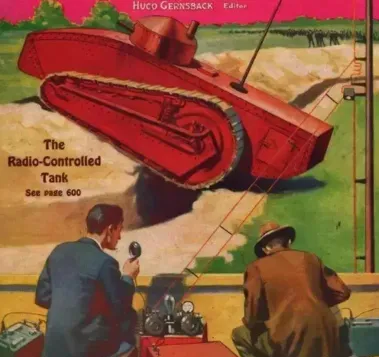
In the 1920s, a driverless vehicle called the “phantom auto” made its debut and subsequently toured major cities nationwide. In fact, the phantom auto worked much like a remote-controlled toy car: both were controlled by radio signals. Even earlier, the military had attempted to apply this technology to tanks.
Even in 2024, autonomous driving is still in the “demonstration” stage. According to a report on the Beijing Yizhuang WeChat official account, the autonomous passenger shuttle demonstration route mainly follows Huangyi Road–Beijing–Taipei Expressway–Daxing Airport North Line–Airport Expressway–Beijing Daxing International Airport. The expressway portion is about 40 kilometers long, and vehicles can autonomously perform a series of maneuvers, including navigating curved ramps and passing through expressway toll stations.

Reliability, then, is paramount for business-facing AI technology. After years of refinement, Weiming Penguin’s AI technology can now be used across a range of scenarios. For example, AI-powered creation of marketing copy, images, and posters quickly turns employees’ creative ideas into tangible results. Digital forms and approval workflows make event management more convenient and efficient. Automated reporting and AI analysis of event data provide valuable market insights and a basis for business decisions. AI makes easily overlooked details clearly visible.
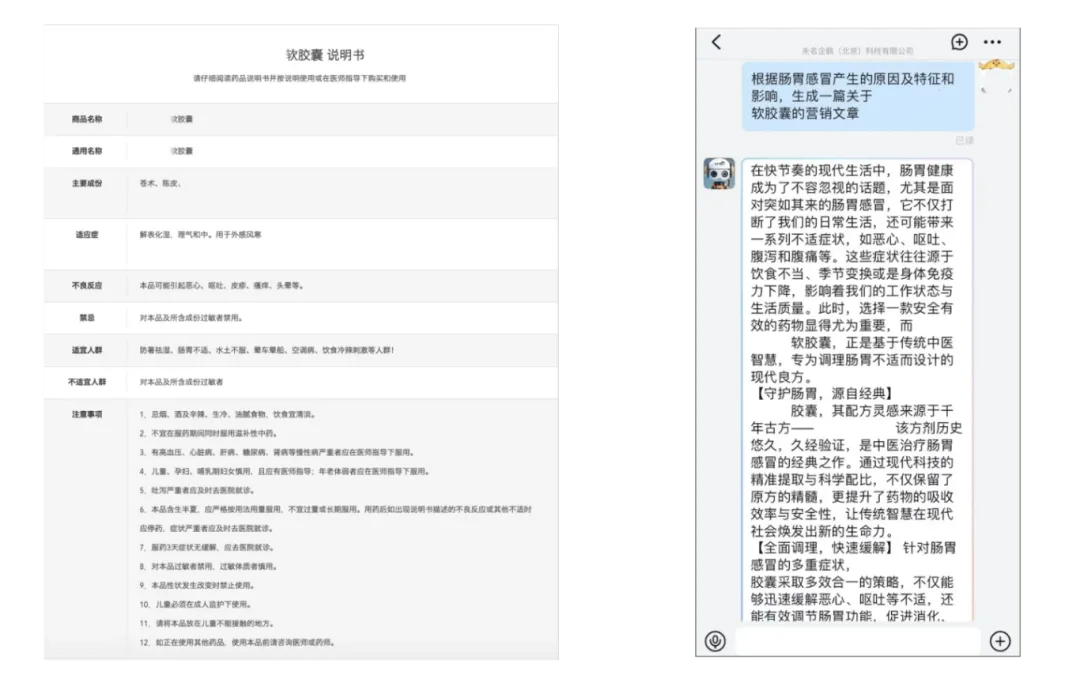
Scenario 1: An AI Assistant Helps Generate Marketing Articles Quickly
Every product article a pharmaceutical company publishes is a bridge for communicating with consumers. Writing about pharmaceutical products, however, involves more than simply putting words together. How to convey a drug’s characteristics accurately while capturing consumers’ attention has long challenged pharmaceutical marketers. First, we can give an AI assistant all of the company’s foundational knowledge. We can also guide it to learn more and provide targeted training. Fortunately, bringing in an AI assistant makes this challenge easy to resolve.
For example, when developing creative content for a particular drug, we use an AI assistant. Even if all you send it is the prescribing information for the drug you intend to reference, it can quickly generate an article. AI-created articles not only accurately convey the drug’s efficacy and advantages, but also incorporate a variety of elements to make the content more readable and engaging. With a writing assistant, marketers only need to apply their professional judgment to check its reliability and medical accuracy before using it in real-world settings!
Scenario 2: An AI Assistant Answers Common Customer Questions in Under One Minute
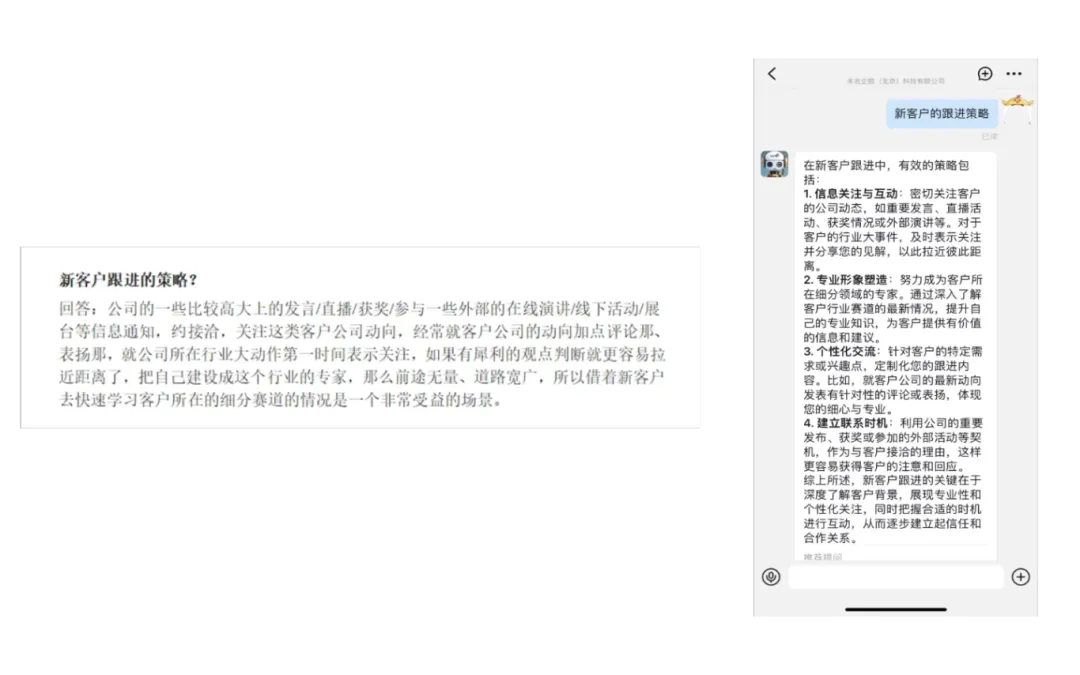
During pharmaceutical sales, customers often have a variety of questions and concerns. Answering them quickly and accurately is an essential skill for sales representatives. Building that skill, however, is a classic process of repeated practice. An AI assistant can support steady daily progress through question practice, role-playing, scenario simulations, and other forms of training. By comprehensively strengthening these fundamentals before sales representatives head out, it not only improves customer satisfaction but also saves pharmaceutical companies considerable staff time and effort spent on sales training and assessment.
With a comprehensive knowledge base built for a pharmaceutical company’s AI assistant, the assistant can quickly identify customer questions and provide professional, accurate answers. Whether a question concerns product efficacy, directions for use, or after-sales service, the AI assistant can provide a satisfactory answer within one minute. It can also continue reinforcing your understanding from different angles to address gaps and blind spots in your knowledge.
Scenario 3: An AI Assistant Knowledge Base Meets the Needs of Different Scenarios
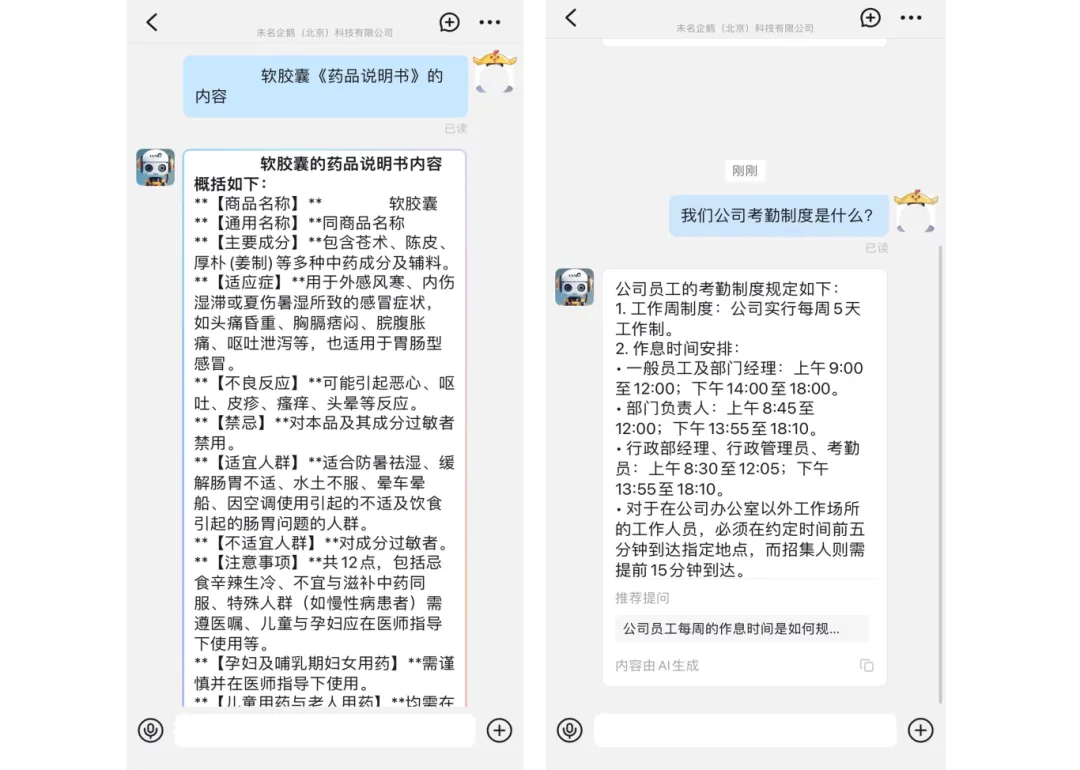
To meet the needs of different scenarios, pharmaceutical companies need a comprehensive, systematic knowledge base. AI assistants provide a better, faster way to build one.
By integrating internal company resources, industry standards, laws and regulations, and other information, an AI assistant can build a comprehensive, accurate, practical knowledge base. This knowledge base covers areas such as team management, project documents, corporate bylaws, and product manuals, and can also be customized and optimized for different scenarios. Whether the need involves marketing plans, drug prescribing information, sales reports, sales training materials, academic research reports, or departmental rules, the AI assistant can provide timely, accurate information support.
Scenario 4: An AI Assistant Improves Workplace Productivity, Encourages Company-Wide AI Participation, and Inspires Individual Innovation
In recent years, pharmaceutical companies have been working to improve employees’ workplace productivity and capacity for innovation. AI assistants provide strong support for achieving this goal.
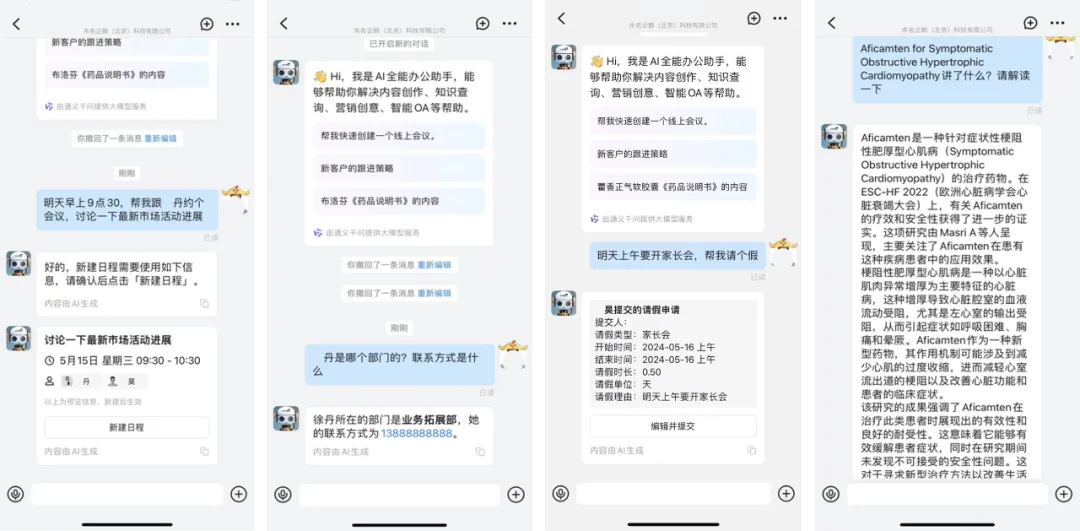
By introducing AI assistants, pharmaceutical company employees can handle a wide range of work more efficiently. An AI assistant can automatically complete tedious, repetitive tasks, such as creating sales meetings and quickly finding the person handling a project, giving employees more time and energy to focus on core business and innovation. It can also help employees access information from overseas research articles, encouraging a forward-looking perspective and creativity.