Article images may contain Chinese text.
[Editor's Note] In his essay “Seven Passages from Remarks on Poetry,” Wang Guowei wrote: Those who have accomplished great endeavors or attained great learning, past and present, have invariably passed through three stages: “Last night the west wind withered the green trees. Alone I climbed a tall tower, gazing down the road to the ends of the earth.” This is the first stage. “My clothes grow ever looser, yet I have no regrets; for her I willingly waste away.” This is the second stage. “Among the crowd I sought her a thousand times; suddenly, turning back, I found her there, where the lantern lights were fading.” This is the third stage. On March 17, 2016, an educational program jointly taught by Peking University's National School of Development and the business school of Fordham University in the United States, awarding a U.S. DPS doctoral degree in financial management, was inaugurated. A group of entrepreneurs and senior corporate executives with extensive practical experience came to the National School of Development to return to their studies after years in the field, moving from practice to theory. A number of students have now completed their formal dissertation defenses and received their DPS doctoral degrees. We will publish short essays by these doctoral graduates in the coming installments, presenting in their own words their genuine feelings, insights, gains, and reflections from their doctoral studies.
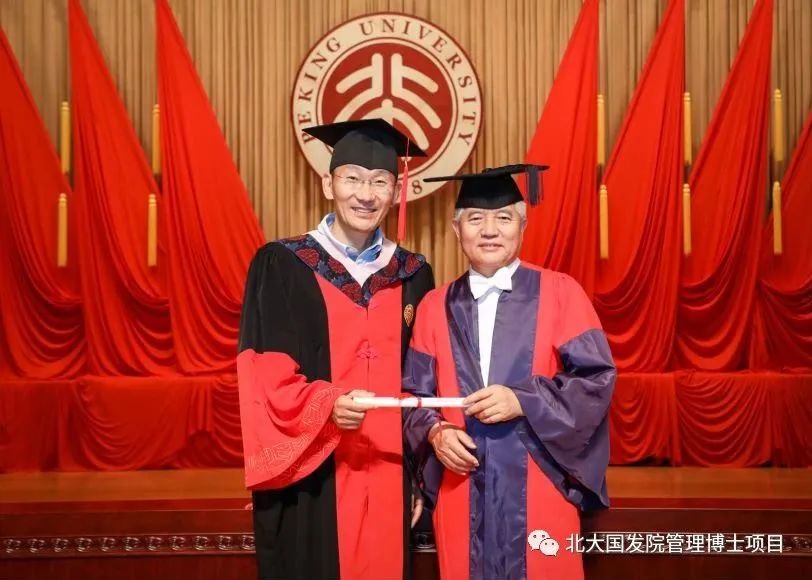
Dr. Zou Xiaoliang (first from left) and Professor Zhang Weiying (first from right) at the 2023 graduation ceremony of Peking University's National School of Development
I was a member of the first DPS cohort in 2015. Eight years have now passed, and the program has enrolled more than 100 doctoral students across five cohorts. As someone who has experienced the program firsthand, I would like to look back on these years of study and share a few personal impressions from three perspectives: my classmates, my teachers, and the program itself.
1. Outstanding classmates: The DPS doctoral program primarily recruits entrepreneurs from a range of industries. At the start of the program, a teacher told us that after so many years of working hard in society and achieving success, choosing to pursue a doctorate showed that we still had aspirations in life. Looking closely at my classmates, I found that they shared a strong desire to learn and a drive to improve, while differing widely in temperament and experience. Take one classmate as an example: with thick eyebrows, large eyes, a broad, powerful build, and a booming voice, he was not only imposing in appearance but also remarkable in conversation. He could speak at length on all kinds of subjects, from every corner of the world and across history. His broad knowledge, rich experience, and distinctive insights always brought a fresh perspective to discussions. He switched from the science track to the humanities track for the college entrance examination and was admitted to Peking University to study economics. After graduating, he worked within the state system for ten years, including at the Gansu provincial government and a large state-owned enterprise in Shenzhen, on the front line of reform. He then pursued further studies in France, returned to China, resigned to start a business, and stepped away after achieving success when the company was at its peak. He exemplifies entrepreneurs who have fought their way through the market while developing an international perspective and a distinctive way of thinking. After entering the DPS program, he was elected academic representative by an overwhelming majority of his classmates and was universally recognized as an outstanding student. During his studies, he developed a strong interest in a renowned professor's research field, read almost all of that professor's books, and devoted himself to studying the subject. He had many opportunities to discuss questions with the professor and seek guidance both in and outside class. After graduation, he stayed at the school where that professor served as dean. He is now an assistant dean there, researching industrial policy and becoming an entrepreneurial scholar with extensive practical experience.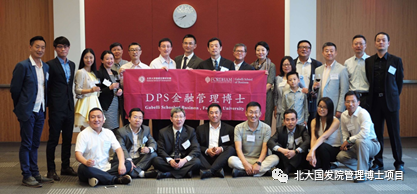
Dr. Zou Xiaoliang (fourth from right in the front row) attending classes with his classmates in New York, United States
2. Masterful teachers: The school has many master scholars with profound learning and distinctive personalities. For example, what Professor Zhou Qiren emphasized most in class was learning to ask a good question. He said that Chinese education places more emphasis on good answers than on good questions. As he put it, “If you can ask good questions, you are more likely to stand out than those who seek good answers.” Good answers require analytical ability, whereas good questions first require careful observation, followed by abstraction and generalization.Professor Zhou has always encouraged students to ask questions boldly. Yet Chinese students often either ask no questions or, even when they have doubts or insights about a question, refrain from responding point by point. To address this, Professor Zhou advocated a return to the Greek approach to teaching. Socrates, Plato, and Aristotle all developed their philosophical insights through discussions about truth. He hoped that DPS students, too, would ask questions boldly and participate in small-group discussions. If you only listen to the teacher, “your mind will forever be someone else's mind”! The philosopher Schopenhauer said, “Reading lets others ride horses through our minds; thinking means riding them ourselves.” At Professor Zhou's suggestion, and with the personal support of DPS Program Director Zhang Yuwei, the DPS doctoral workshop at Peking University's National School of Development was launched. At regular or occasional sessions, one doctoral student gives a presentation and everyone joins the discussion. Established in 2017 and continuing to this day, the forum has become a platform for discussing questions and sharing knowledge.My supervisor, Professor Yang Zhuang, spent decades studying and working in the United States before joining the National School of Development, and held a tenured professorship at a U.S. university. In 2009, at the invitation of Professors Lin Yifu and Zhou Qiren, he formally joined Peking University full-time as a professor of management and co-dean of BiMBA Business School. Professor Yang devoted enormous effort to developing the school's business and management disciplines. His three Cs—Competence, Character, and Commitment—complement Vision, Mission, and Passion, enriching BiMBA's core values. Students have repeatedly rated his management courses as “the most rewarding,” “the most thought-provoking,” and “the most practical.”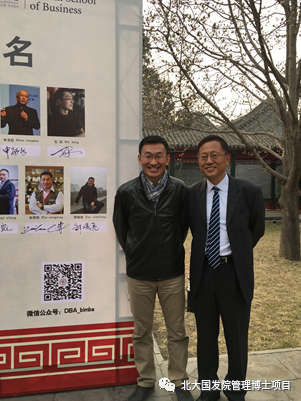
Dr. Zou Xiaoliang (left) with his supervisor, Professor Yang Zhuang (right)
3. Bringing East and West together: The DPS doctorate in management differs from an academic Ph.D. Most participants are entrepreneurs with extensive experience in a variety of industries. One of their main reasons for studying here is to organize their business experience more systematically, reflect on it deeply, and elevate their understanding through theoretical study. The DPS doctorate aims to make students more academically grounded than entrepreneurs and more knowledgeable about business than scholars. These years of study have been extremely demanding. In the U.S. study modules, we took management and finance courses at Fordham University, an American university with more than 180 years of history. The university has outstanding business administration education resources, has repeatedly ranked among the top 15 nationally for MBA education and finance programs, and is accredited by the Association to Advance Collegiate Schools of Business (AACSB). AACSB is one of the most important international accreditations for business schools; fewer than 5% of business schools among nearly 13,000 business programs worldwide have obtained it. There is a saying that half of Wall Street's elite graduated from Fordham University. Visits to West Point, IBM, Bloomberg, and local startups also gave us a deeper appreciation of companies and academic education in different cultural settings. Back in China, Peking University's National School of Development was among the first institutions selected for the country's national high-end think tank initiative. Its professors' research has an important influence on many major issues, including government–market relations, population and pension policy, China–U.S. relations, the private economy, digital finance, healthcare reform, and industrial policy. During our time at Peking University, all these courses were open to DPS doctoral students. In the first year, I truly experienced the painful process of finding that the more I read, the more there was to learn, while never having enough time or energy. Every topic opened up into a vast ocean of knowledge. On countless late nights, as I wrestled with the hefty specialist books and articles assigned by our teachers and struggled to sleep, I also realized how many things I had previously understood only superficially—or had never even considered! As former U.S. Secretary of Defense Rumsfeld said, “there are also unknown unknowns: the ones we don't know we don't know.” This experience instilled in me a profound respect for research and scholarship. After intensive study, I gradually narrowed my focus in line with my research interests, while gaining more experience with research methodology, how to approach and analyze a question, and how to search the literature. In this process, I gradually found that my understanding of a particular question had deepened and that I had developed independent thoughts and insights of my own. Little by little, the confidence that had seemed crushed began to return. It truly felt like finding a new village beyond the dark willows and bright blossoms. My supervisor, Professor Yang Zhuang, said that doctoral study requires a spirit of professionalism. Professionalism is, in fact, a philosophical idea that Socrates proposed more than 2,000 years ago. Becoming an expert requires dedication and hard work; nothing falls into your lap, and doctoral study will be exhausting. Although the process is painful, once you have completed the journey, you will see the dawn ahead and feel the joy of having gained knowledge. Over these years, I have personally come to understand what Professor Yang meant. Here I would especially like to thank my supervisors, Professor Yang Zhuang and Professor Yan An, as well as Zhang Yuwei from the program team. Their encouragement and care gave me vital support as I climbed the path of learning!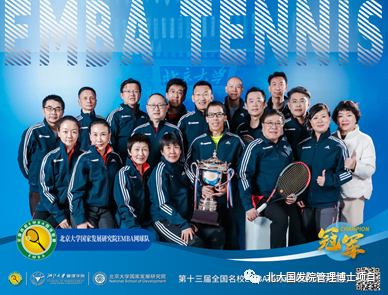
Zhang Yuwei, director of the DPS doctoral program, is second from right in the second row
During our studies in the United States, Yuwei led us to the University of New Haven to meet Dr. Henry C. Lee, known as a legendary detective. Dr. Lee spent an afternoon sharing his experiences of studying and working in the United States. His accounts of solving several internationally famous cases were particularly fascinating. A classmate asked him what the key to his success was. His answer was concise: “My success does not depend on who I am; my success depends on who I am with.” A teacher also mentioned a famous saying by Mei Yiqi during class: “What makes a university is not its grand buildings, but its great scholars.”After five years of study, I graduated with my doctorate. Looking back on this learning experience, I deeply identify with the two statements above. After traveling alongside outstanding classmates, hearing master scholars teach at close quarters, reading widely, and traveling far, I have gained a deeper understanding of the meaning of “an independent character and freedom of thought,” associated with the National Southwest Associated University and Peking University. Although my doctoral studies have ended, life has limits, while knowledge has none. Long and far-reaching is the road ahead; I shall search high and low!Author: Dr. Zou Xiaoliang (DPS15)
Formerly a university instructor and one of China's earliest internet professionals, he spent more than ten years as a senior executive at Tencent and Alibaba. In 2015, he started a business in pharmaceutical big data technology and digital solutions, becoming founder and CEO of Weiming Penguin (Beijing) Technology Co., Ltd. The company has received hundreds of millions of yuan in three funding rounds from institutions including Matrix Partners China, Chengwei Capital, and Redstone Venture Capital. With numerous patented big data technologies and a broad client base of domestic and foreign pharmaceutical companies, it is a leading company in its field. His honors include appointment as an expert at Caixin Insight, the Rising Star Award marking the 40th anniversary of reform and opening up in China's pharmaceutical distribution industry, and the Beijing Haiying Talent designation.Dissertation title: Research on Data-Driven Intelligent Management of Pharmaceutical Marketing
About the DPS Doctoral Program in Financial Management
The DPS (Doctor of Professional Studies in Business) doctoral program in financial management offered by Peking University's National School of Development and Fordham University in the United States is an educational program jointly taught by the two institutions that awards a U.S. DPS degree, described as a doctorate in financial management. The doctoral degree is approved by New York State's education authority and awarded by Fordham University. Since 2015, the program has carefully selected and admitted five cohorts of outstanding entrepreneurs from China and overseas. Industry leaders and key corporate decision-makers from finance, telecommunications, the internet, real estate and construction, law, energy, culture and media, education, processing and manufacturing, services, and other sectors learn from professors as well as from one another, create together, share openly, build academic foundations, broaden their horizons, and elevate their perspectives, effectively expanding the possibilities of their lives, scholarship, and businesses.
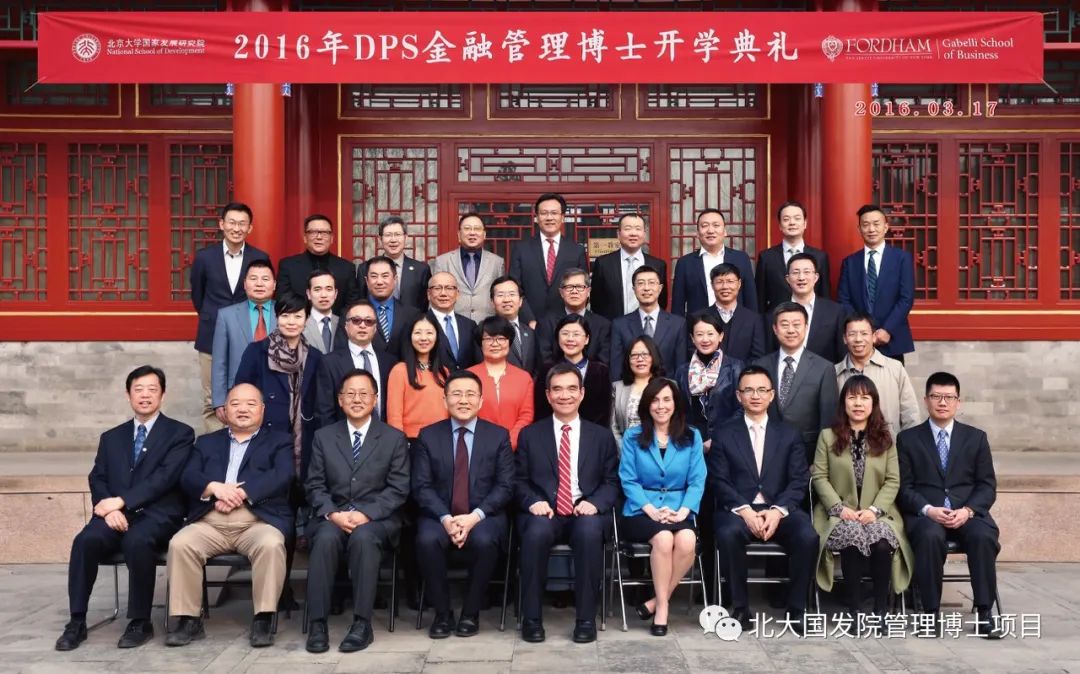
Group photo at the opening ceremony for the first cohort of the DPS doctoral program in financial management (March 17, 2016)
For details about the DPS doctoral program in financial management, click “Read Original” to register your interest and request a consultation. Our program staff will contact you as soon as possible.