Exploring New Horizons in AI Applications: Weiming Penguin CTO He Baochen Shares His Research on ChatGPT Technology
Article images may contain Chinese text.
ChatGPT has recently attracted widespread attention and adoption. As a company focused on digital transformation in the pharmaceutical industry, Weiming Penguin aims to provide efficient, intelligent solutions for its customers through innovation in technology and services. Recently, Weiming Penguin CTO He Baochen (Gary) presented the results of his research on ChatGPT technology at an internal sharing session. By demonstrating ChatGPT’s capabilities and introducing the technology’s basic principles, core capabilities, and future prospects, he offered Penguin colleagues an inspiring picture of the future of AI applications.

Weiming Penguin CTO He Baochen (Gary)
First, Gary demonstrated ChatGPT’s powerful capabilities. In software development, ChatGPT can perform automated testing, code review, code optimization, and other tasks to improve development efficiency and quality. It can also perform data analysis and visualization and supports various programming languages and frameworks. In human resources, ChatGPT can assist companies with recruitment and talent management through resume analysis, interview simulations, and other methods. It can automatically screen and evaluate applicants’ personal information and work experience, thereby providing companies with more accurate and comprehensive talent assessments and recommendations. Beyond these areas, ChatGPT can also play an important role in health management, emotional counseling, intelligent customer service, and other fields—for example, by creating weight-loss plans, providing psychological guidance, and answering users’ questions.
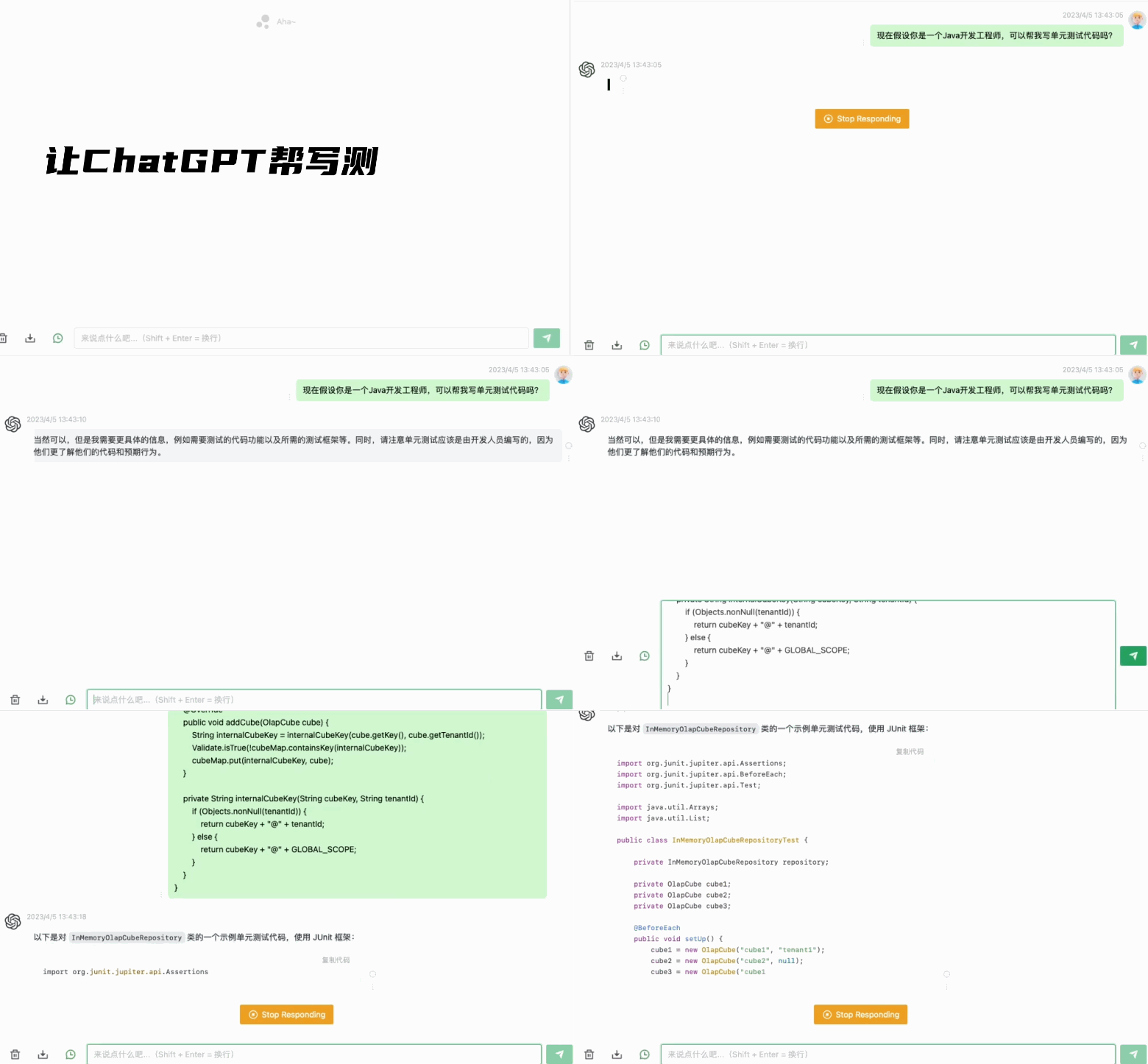
Gary then gave Penguin colleagues a detailed introduction to ChatGPT. ChatGPT was developed by the team at the AI company OpenAI. ChatGPT’s full name is “Generative Pre-trained Transformer,” a generative pre-trained transformer model. Built on OpenAI’s research, it uses massive amounts of data for unsupervised pretraining and can generate coherent, reasonable text sequences without training for a specific task.
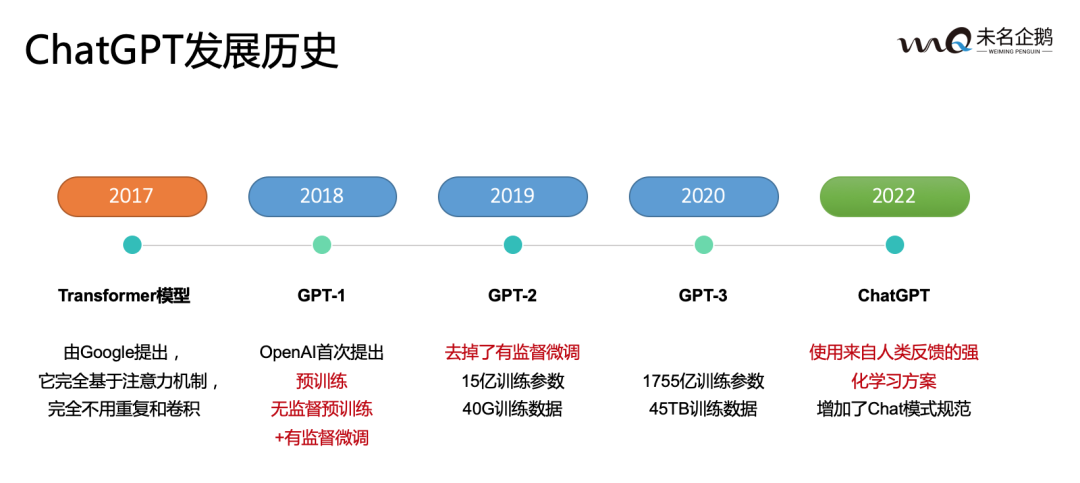
Next, Gary explained ChatGPT’s basic concepts. ChatGPT uses a Transformer network architecture and is trained on massive amounts of data, giving it strong capabilities in semantic analysis and automated question answering. It can perform intelligent semantic analysis, convert users’ words into computer-readable information, and automatically generate logically reasonable answers. ChatGPT also supports features such as multi-turn conversations, autocompletion, and intent recognition, enabling a more natural, fluid interaction experience. However, ChatGPT also has certain limitations, such as an inability to provide specialized professional services and a lack of emotion recognition.
Gary then discussed how to understand ChatGPT technology. As an AI technology based on natural language processing, ChatGPT can simulate human interaction to enable human–computer dialogue. Its development has involved continuous optimization and iteration, not only improving the technology itself but also advancing the AI field as a whole.
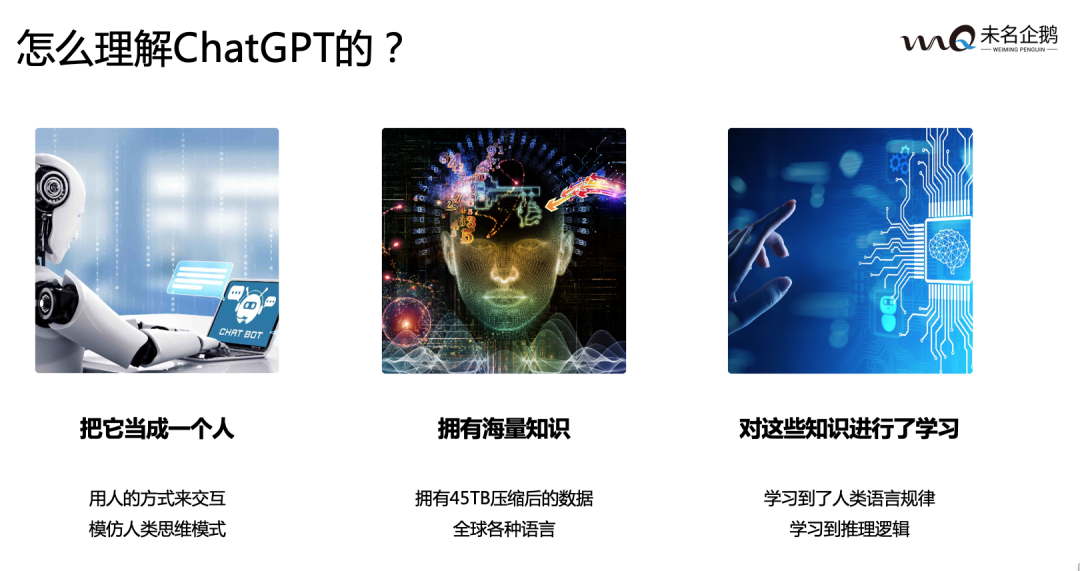
Finally, Gary and his colleagues explored the future direction of ChatGPT. Its intelligent services, broad range of application scenarios, semantic understanding, and adaptability are expected to make ChatGPT widely used across social media, news media, online education, healthcare, and many other fields, bringing more intelligent, convenient, and personalized services and experiences. As AI technology develops in the future, ChatGPT is expected to continue attracting widespread attention and adoption, becoming an important force in the development of an intelligent society and digital transformation.
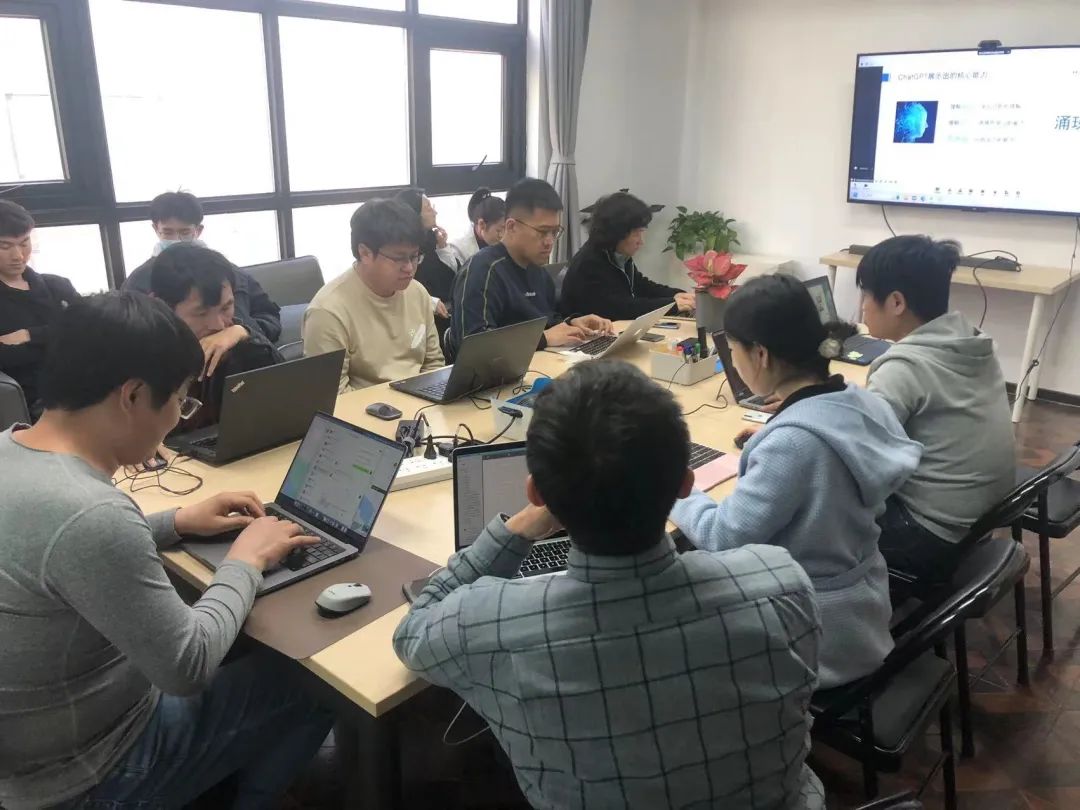
Gary’s session opened up new horizons for Penguin colleagues to explore AI applications. Moving forward, Weiming Penguin will continue to be driven by technological innovation, steadily strengthening its R&D capabilities and technical expertise to provide customers with more intelligent, convenient services.