News / All News / Article

Stories of Weiming Penguin People: Liu Xin—Five Years of Volunteering, Because Being There Is the Most Enduring Expression of Love

Article images may contain Chinese text.

In a conversation with Liu Xin, a colleague who joined us this year, our editor discovered more stories about this sunny, enthusiastic woman: outside work, she volunteers every Saturday and Sunday afternoon to care for people experiencing homelessness. She brings them food, clothing, and other daily necessities, chats with them, and listens to what is on their minds... She has kept this up for five consecutive years.


Liu Xin says that going to see them every weekend is like visiting her own friends and family; it has become part of her life. She says this is not just about helping others. After five years, she feels she has gained even more herself. At a volunteering event, a colleague from our company met Liu Xin and invited her to join Weiming Penguin, marking a new starting point in her career. We wish her continued growth at Weiming Penguin as she pursues her dreams.


Here is Liu Xin's story. Enjoy:


Five Years of Volunteering: Being There Is the Most Enduring Expression of Love
Liu Xin

People think of Beijing as an ancient capital with a rich heritage, a political and economic center, and a modern metropolis full of dreams and openness. Among its bustling population of 20 million, people lack connections with one another. Everything seems connected and familiar, yet also isolated and indifferent. When more people look beyond themselves to society and pay attention to people as individuals, they bring greater warmth and humanity to our society.

In 2017, a few like-minded friends and I wanted to do something together. We decided to focus on people on the margins of society, those who are overlooked—older adults living alone without family support, children with disabilities, and people experiencing homelessness. We call all of them our friends. Because of physical, mental, and other difficulties, they have been pushed to the margins by relatives, friends, and their living circumstances. They shut themselves away and lack trust in society. We are willing to reach out and build friendships to help them regain hope in life.


Once we began volunteering, we would not stop.
When we first considered making visits, we discussed how we would do it and reached a conclusion: once we started, we would not stop, no matter how many difficulties we faced! What mattered was not how much we did each time, but that we kept doing it. Agreeing to meet every week became a shared, unspoken principle. So each time, we say, "We will be back at this time next week. If you haven't moved on, wait for us here, okay?"

Each time we visit, we bring food and necessities to meet our friends' basic needs. At first, we made sandwiches, but later realized that familiar Chinese food reminded them of home and that they preferred steamed buns. Gradually, people nearby came to recognize that "the people who bring steamed buns" were back. Over time, our families, friends, and colleagues saw what we were doing, expressed their support, and volunteered to help. As the weather changes, we also worry about whether they have suitable clothing and help whenever there is a need. Since we do not have much space, all we can do is arrange collection, pickup, delivery, and distribution as needs arise. Every quarter, we also provide bathing and haircut services—a complete service to help everyone feel clean and refreshed.

Beyond material necessities, they need love and acceptance even more.
We do not just provide whatever material assistance we can, because I know that material things alone are not enough for these friends. They need companionship and someone to listen, genuine attention, empathy, and respect even more. How do we build relationships with them? Just as we make friends in everyday life: we begin by introducing ourselves, take the initiative to share funny stories from our lives, ask their names, and learn about their lives.

After spending time with them, you realize that hunger and homelessness are not only physical conditions. Visible material needs are easy to meet, but invisible emotional longings are difficult to satisfy. They call for visit after visit, gradually melting the barriers away. Hunger can result from a lack of love and acceptance, because without love and acceptance, a person can truly die of that hunger and thirst. Homelessness can arise from fear of outsiders and a refusal to communicate. Without common ground and a warm welcome, it is like being cast out into the wilderness. The people we seek may be far away or close by: beside the road, at food stalls in shopping centers, in a KFC at night, or beneath the city's pedestrian overpasses. With a little more attention, you can find them.


Among the friends I have come to know, Ruifeng was the first to make me worry about him, and I still remember him vividly. We met in 2018, although I have not seen him for quite some time recently. He has a dark complexion and has had a disability since childhood. He has difficulty walking and cannot manage his toileting needs independently. Although his family is wealthy, his parents could not accept his condition and frequently hit and scolded him. Unable to bear it, Ruifeng ran away, preferring to sleep rough rather than return home. Whenever we met, he was always cheerful. He made a living collecting bottles, and the sanitation workers nearby liked to look out for him and save bottles for him. When we could not find him, these workers would also tell us where he might have gone. Sometimes his family came in person to take him away, but within a few days, he would run away again. On New Year's Day in 2018, we held a holiday event and invited our friends to welcome the new year together. He happily sang "Mom Is the Best in the World" for everyone, but began crying as he sang. The scene of his longing and sadness remains vivid in my mind. All we can do is quietly stay by their side and share happiness. In some urgent or dangerous situations, we help by calling the police or finding a relief station or hospital. We do not have the capacity to take care of everything, but we can do small things within our means, acting as a bridge or a helping hand.

Sometimes we also sit down at the same table and share good food and ordinary moments. Sometimes I think that, without taking part in this volunteering, it would be hard to experience such moving moments. There is no fear or distinction; we treat one another as equals. Without sharing their lives, we cannot share their hardships or know what they feel. Each week, when we visit and spend time with them, we share a brief part of their lives and gain a deeper understanding of their joys and sorrows.

Many people hear about our volunteering, seek us out, and help us with funds and supplies. We do need everyone's donations, but we also hope this will encourage more people to get to know this community in person. We often reply: if you have time, please make the effort to join our activities as well. Their greatest difficulty is not just money; it is that people deny their human rights and their right to love and be loved. Through meeting them and making real human contact, we hope to build relationships in which love is given and received.

To live, people need more than food. They also need to give love and receive recognition and respect, and these friends are no different. Even when they are too poor to feed or clothe themselves adequately, they are willing to give to those in greater need. That generosity alone is something we should learn from. Often, we give out clothes one week, only to find them still wearing rags when we return the next week. When we ask why they are not wearing the clothes, they say an older person or a child needed them, so they gave them away. There is no one in the world who is incapable of helping and loving others; there are only people who are ungenerous, with eyes and hearts only for themselves.

We also often preserve memories, remembering every friend who has come: their name, their circumstances, and what they look like. At the end of almost every weekly activity, we stand together for a photo, and it is often impossible to tell who is helping and who is being helped. Because we show up and keep coming back, they gradually let down their guard, smile, open their hearts, and change how they see the world. They realize that there are still people who care about their physical and emotional well-being, who listen to and take part in their life stories, and who encourage them to strive to live as themselves. As unique individuals, they have never been forgotten by society and still have the right to love and be loved. They can still face life with hope, dignity, and determination, holding their heads high—even if they make a living collecting bottles, cans, and cardboard, even if they live in a roadside median.

Building Friendships Means Receiving Even More
And what about those of us who volunteer? We, too, are cared about and made to feel valued. We ask everyone who joins us to introduce themselves, ask our friends' names, and remember them. Our friends often ask me, "Why didn't so-and-so come? Is he okay?" or "When will he come? He hasn't been here for a long time." I smile and ask, "You miss them, don't you?" "Yes." Hearing this warms my heart. These exchanges sound just like the concern shared among family and friends.

I remember a very windy day in early spring one year. We went to visit our friends as usual. Just as we were about to finish, Auntie Shi took my hand and said, "Wait a moment. I have a gift for you." She took a beautiful apricot-pink bracelet from her bag and put it on my wrist. She said, "This is for you. I don't have much. I bought this before, and I want you to have it. Thank you all, truly." At that moment, this gift made me happier than receiving something from a luxury brand, because she had given me one of her few treasured possessions. It was that sincerity that was precious. In fact, being with them is by no means just about giving; we receive even more: a quiet joy and peace rooted in inner goodness, a friendship free of self-interest, and a love, given and received, that reaches beyond ourselves.
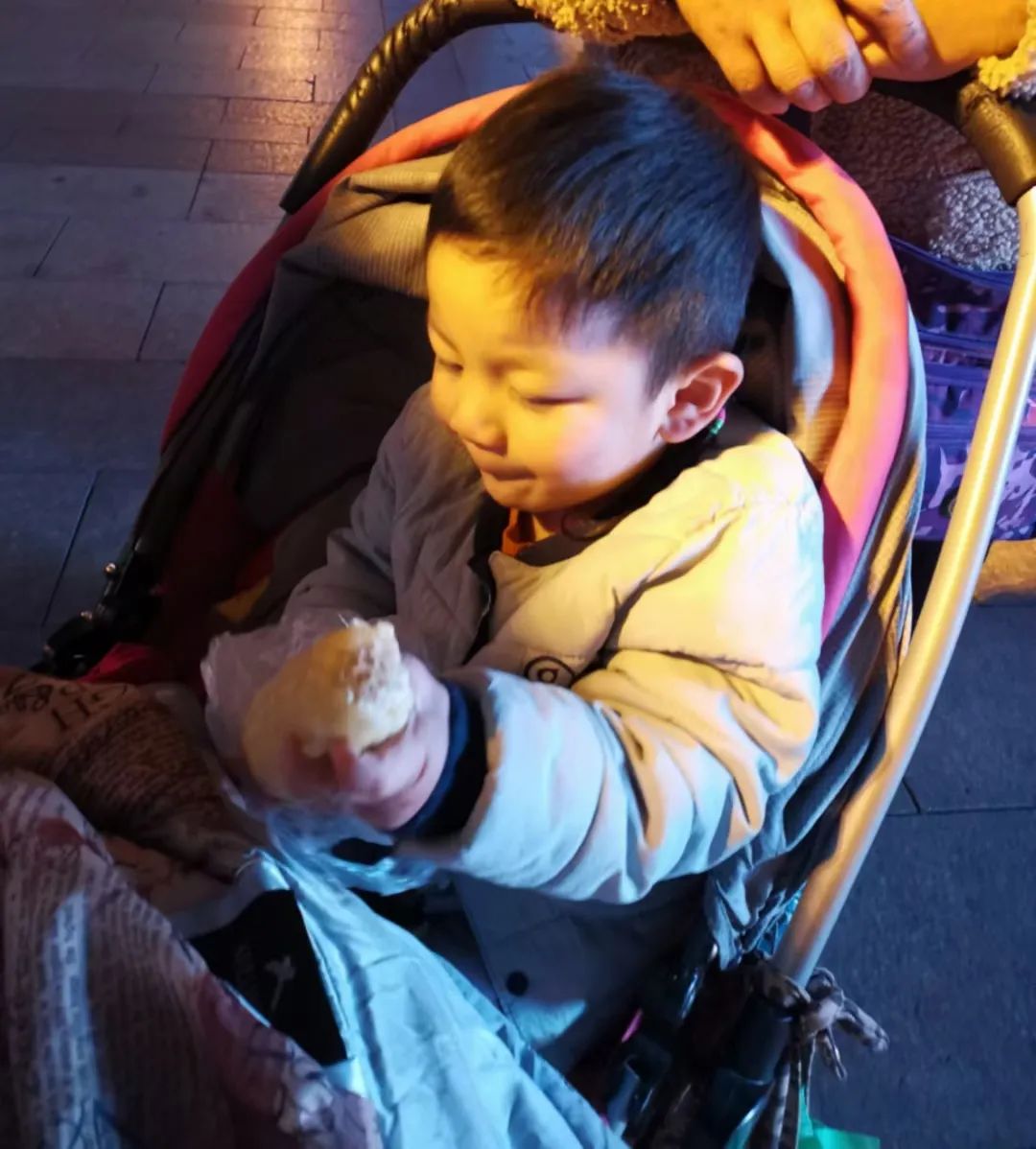

Perhaps this is friendship coming full circle. Over these years, some people have come and gone, while others we have newly met—quite a few, really. Now I sometimes suddenly think of friends who left long ago. Our memories are more vivid than the photographs we kept, bright points in our recollections that we miss. Yet they are only inconspicuous passersby; perhaps no one even knows who they are, where they come from, or their past. One day they may leave this world like withered grass, without anyone asking after them. I hope more people will notice these communities. The world is far richer than what we see, and it also needs far more mutual help than we realize. If you encounter someone experiencing homelessness, do not be afraid. Offer some food or a greeting, a piece of clothing or a call to the police…


Hunger does not refer only to food, but also to a longing for love; nakedness does not refer only to a lack of clothing, but also to the loss of human dignity; homelessness does not refer only to needing a place to stay, but also to being excluded and rejected. Beyond poverty and hunger, the world's greatest problems are loneliness and indifference. May we step beyond our isolated islands and become people who are easy to love, with less indifference and more warmth. I am reminded of an experience of Mother Teresa in India: a man was brought back from a gutter, his body almost being eaten away by lice. They brought him home and treated him. He said, "On the street I lived like an animal, but I will die like an angel, because I have received love and care." In truth, those who help others are as beautiful as angels.

Society generally calls charitable acts almsgiving; I think of them as sharing. We share the good things we have with those who lack them. It is about distributing society's surplus resources, and about equality and respect. People on the margins of society also give us friendship and love, a deep inner joy and peace, and the fulfillment of a greater dream.

Before we knew it, five years had passed. We set out on this path because we wanted to do something, but it does not end here. In the years ahead, we will continue to reflect on and put into practice the essence of volunteering, developing foresight, expanding our dreams, and allowing kindness to flourish. This is only the first five years. There will be many more five-year periods, and many more moments in everyday life when we agree to come together to care for people on the margins of society. Being there is the most enduring expression of love.

End of Article

Volunteering really is not that complicated. Opportunities to help are all around us.
In fact, volunteering is not limited to orphanages and nursing homes; it can happen throughout our everyday lives. I hope more people will broaden their perspective, see others' needs, and reach out to help, even in very small ways. Changing the world starts with changing ourselves. If everyone gives a little love, the world will have a beautiful future!


About Weiming Penguin
     
With a mission of 'Connecting Health,' Weiming Penguin is committed to providing big data products and solutions for the life sciences and healthcare sector, helping clients achieve data-driven business growth.

The 'Weiming' in Weiming Penguin represents Peking University and signifies a humanistic spirit, while the life sciences and healthcare sector is an industry that embodies care for people. 'Penguin' symbolizes technology. Weiming Penguin's founding team graduated from Peking University, and its technical expertise comes from Tencent. The company was named Weiming Penguin to express the hope of advancing digital development in the life sciences industry by combining humanistic values with the power of technology.

Big Data and Solutions Experts for the Pharmaceutical and Healthcare Industry